When Canvas Came to Life
How a simple transition from heavy wooden panels to woven cloth revolutionised the world of art.
When Canvas Came to Life
How a simple transition from heavy wooden panels to woven cloth revolutionised the world of art.
By Davy Jones
Published: 12 October 2025
By Davy Jones
Published: 12 October 2025
Before Canvas: What Did Painters Use?
Canvas, the staple surface of modern painting, did not appear suddenly but evolved gradually as artists sought more practical and flexible alternatives to wooden panels and fresco walls. The origins of canvas as an artistic support can be traced back to the early 15th century in Italy, particularly in the city of Venice. While no single individual is credited with ‘inventing’ canvas, its development is closely tied to the innovations of Venetian painters who adapted materials used in their maritime environment.
Venice, with its strong shipbuilding industry and bustling trade routes, had easy access to sailcloth made of hemp and flax – strong, durable materials that were ideal for painting. Venetian artists began experimenting with this heavy cloth, stretching it over wooden frames and priming it with gesso to create a smooth surface for oil paints. This innovation allowed painters to work on much larger and lighter surfaces compared to traditional wooden panels, which were heavy, expensive, and prone to cracking in the humid Venetian climate.
The earliest surviving examples of oil paintings on canvas remain a subject of debate among art historians. However, many scholars point to devotional works and processional banners from the early 15th century, particularly from the Venetian region, as the first instances of artists experimenting with the material. The earliest known European paintings on canvas are generally agreed to date from the mid-15th century. Artists such as Andrea Mantegna and Giovanni Bellini were among the first to truly explore the material’s potential in their large-scale compositions, though it did not become a common support for most painters until later in the century.
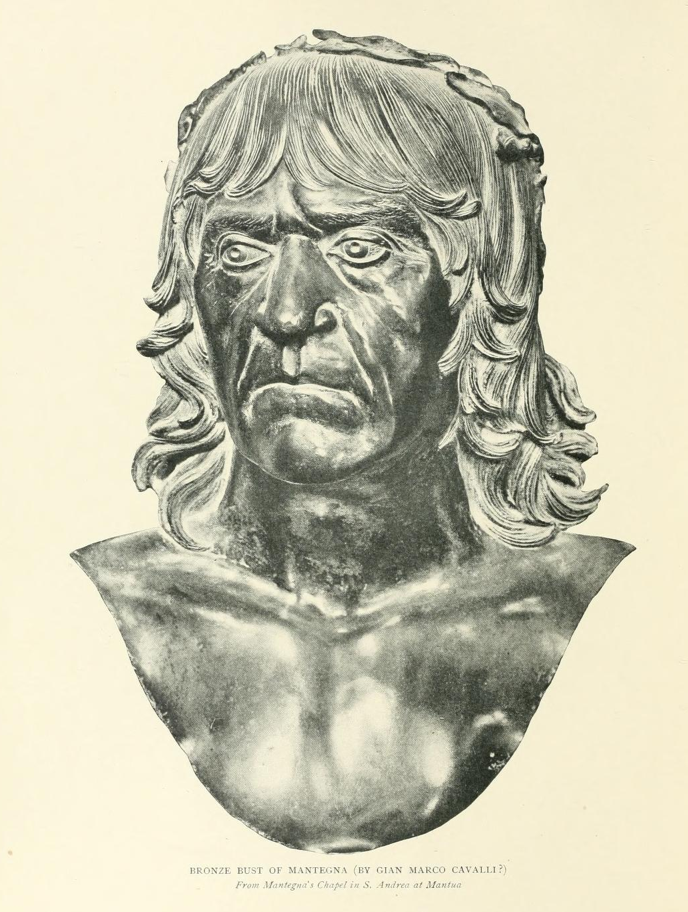
Bronze Bust of Mantegna, Autotype Company (1901).

Presumed self-portrait of Giovanni Bellini, the leading painter of the Venetian Renaissance.
By the early 1500s, canvas was becoming increasingly common among artists in Venice, with pioneers like Giovanni Bellini and later Titian making full use of its possibilities. Titian’s large-scale oil paintings demonstrated the canvas’s strength, flexibility, and suitability for bold brushwork and deep, rich colours. From Venice, the use of canvas spread throughout Europe, embraced by painters who appreciated its affordability, portability, and ease of preparation.
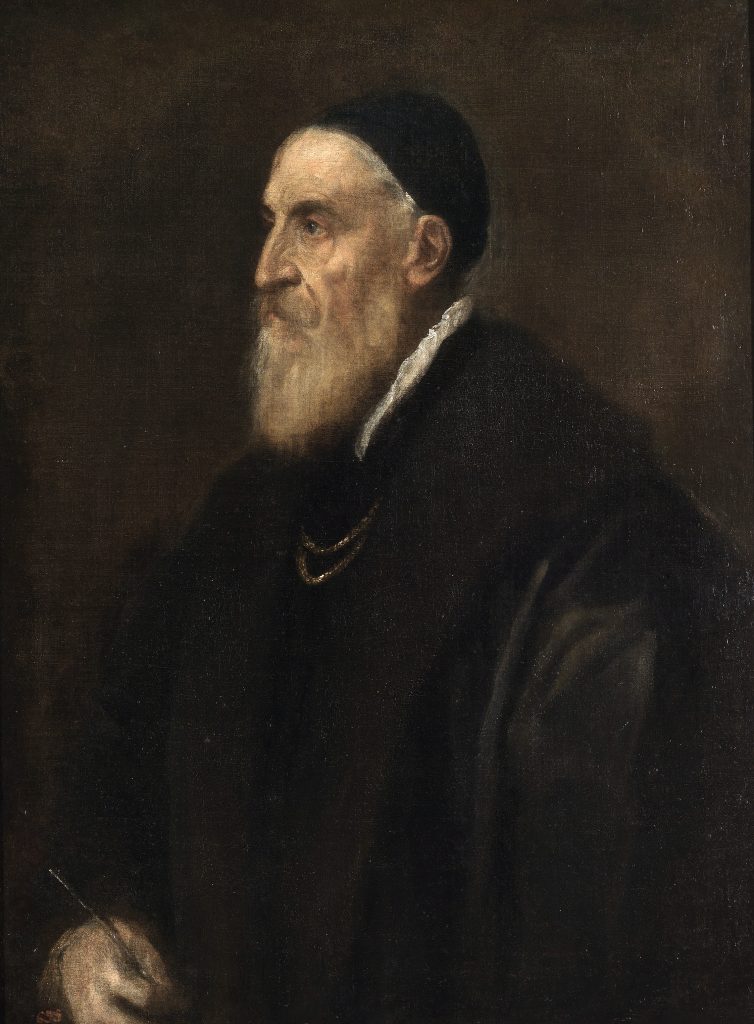
Self-Portrait of the Italian painter Tiziano Vecellio (c. 1490–1576), better known as Titian.
The transition from wood to canvas marked a turning point in art history. It not only allowed for the creation of monumental paintings but also transformed studio practice. Artists could now roll up their works for transport, enabling easier trade and international commissions. Over time, linen canvas replaced hemp for finer-quality work, especially in Northern Europe, where artists like Rembrandt and Rubens adopted it for their masterpieces.

Self-Portrait with Beret and Turned-Up Collar (1659) by Rembrandt van Rijn, National Gallery of Art, Washington, D.C.
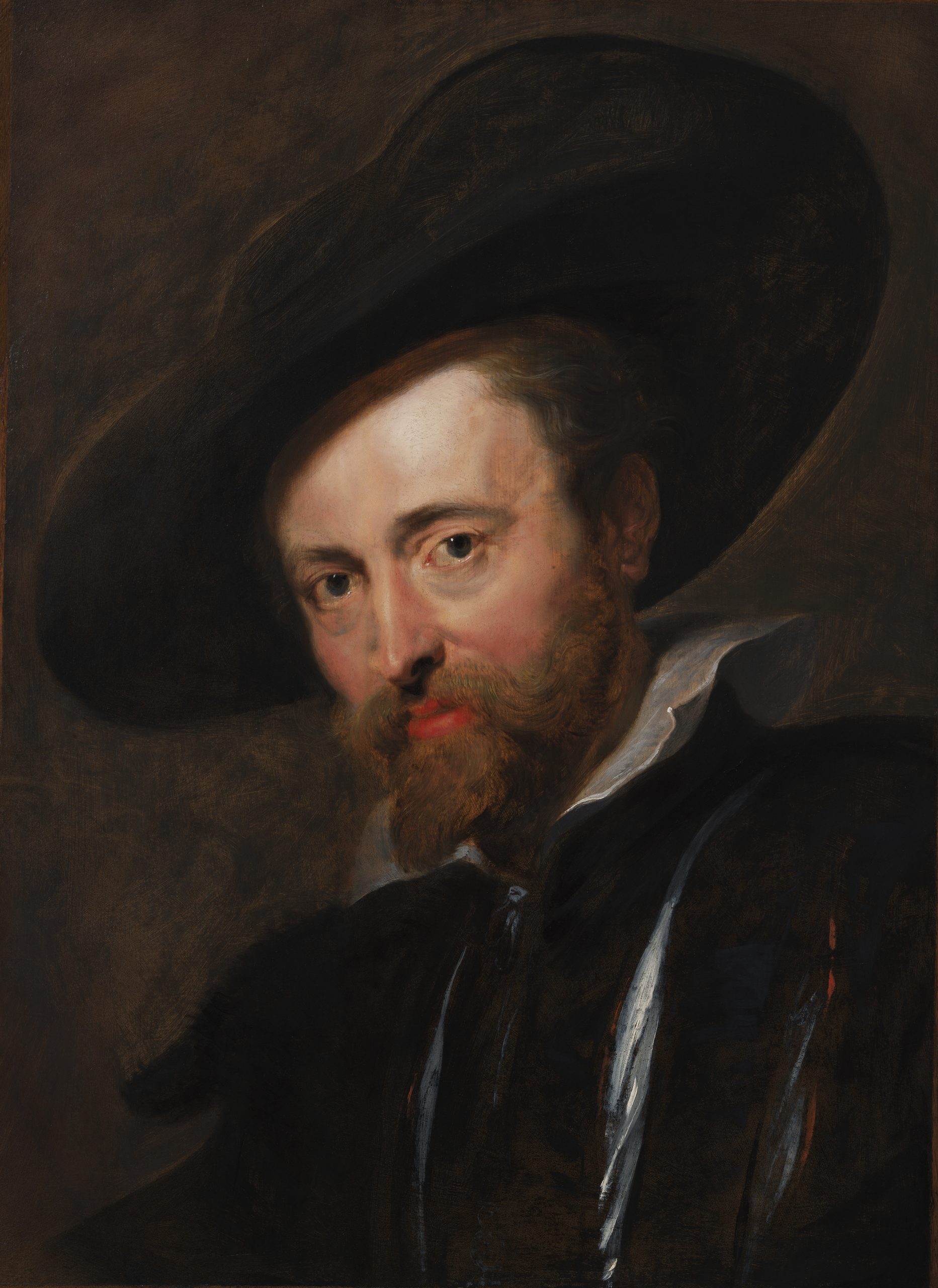
Self-Portrait by Peter Paul Rubens, Rubenshuis, Antwerp (after restoration).
In conclusion, while there was no single inventor of canvas, its adoption as an artistic medium was a result of regional innovation, particularly in Venice during the Renaissance. The canvas was not a discovery, but an adaptation – an artist’s solution to practical problems – which ultimately revolutionised the art world and continues to support creativity to this day.
Before canvas became the go-to surface for painting, artists throughout history relied on a variety of materials to bring their visions to life. Each era and region had its own preferred medium, influenced by availability, technology, climate, and cultural traditions. As this work continues, we shall explore the primary surfaces painters relied upon before canvas became widespread.
1. Wood Panels
Before the 15th century, especially in Europe, wooden panels were the dominant support for paintings. These panels were usually made from local hardwoods such as oak in Northern Europe or poplar in Italy. Artists would prepare the wood with layers of gesso – a white mixture of chalk, gypsum, and animal glue – to create a smooth and absorbent painting surface.
- Famous Examples: Early Renaissance paintings by Giotto, Duccio, and Jan van Eyck were all executed on wood. Leonardo da Vinci’s Mona Lisa (c. 1503) remains on a poplar wood panel.
- Advantages: Durable and exceptionally smooth surface.
- Disadvantages: Heavy, prone to warping or cracking in shifting humidity.
2. Fresco (Plaster Walls)
In ancient times and throughout the Middle Ages and Renaissance, fresco painting – applying pigment onto freshly laid lime plaster – was widely used, particularly for murals.
This technique dates back to ancient Aegean (Minoan), Greek, and Roman civilisations. The artist would apply natural pigments mixed with water directly onto wet plaster. As the plaster dried, the pigments bonded with the wall, creating a vivid and long-lasting image.
- Famous Examples: The murals of Pompeii; Michelangelo’s Sistine Chapel Ceiling (1508–1512).
- Advantages: Long-lasting, vibrant colours.
- Disadvantages: Requires rapid execution before the plaster dries; entirely immobile.
3. Parchment and Vellum
For illuminated manuscripts and detailed miniature paintings, especially during the Medieval period, artists painted on parchment (treated animal skin) or its finer variant, vellum (calfskin).
This surface was used primarily in religious texts, books, and scrolls. Artists applied tempera or ink, often combining it with gold leaf to decorate sacred manuscripts.
- Famous Examples: The Book of Kells (9th century); The Lindisfarne Gospels (c. 700).
- Advantages: Enables fine detail; durable.
- Disadvantages: Expensive; strictly limited in physical scale.
4. Papyrus and Early Paper
In ancient Egypt, papyrus was used for both writing and painting. Made from the pith of the papyrus plant, this early precursor to paper was used for scrolls and documents. While not sufficiently durable for long-term painting, it served well for illustrative and symbolic works.
Later, paper introduced from China (around the second century AD) began to be adopted across the Islamic world and Western Europe by the late Middle Ages for sketches, drawings, and watercolours.
- Famous Examples: Ancient Egyptian illustrative papyri; early Chinese and Islamic ink drawings on paper.
- Advantages: Lightweight and versatile.
- Disadvantages: Fragile; poorly suited to heavy oil pigments.
5. Cloth and Linen (Pre-Canvas)
Before canvas as we know it today became standard, some artists painted on linen cloth, particularly across Mediterranean regions. Linen was occasionally used in earlier eras for banners, processional hangings, and altar pieces.
The major shift to canvas, usually woven from hemp or flax, began in Venice during the 15th century. Being a maritime city, Venice enjoyed easy access to sailcloth – sturdy, tightly woven, and ideal for large oil compositions. Canvas eventually replaced wood panels for most painters because it was lighter, more affordable, and vastly more portable.
- Famous Examples: Venetian Renaissance altarpieces on linen; early oil paintings by Venetian masters such as Bellini and Carpaccio.
- Advantages: Lightweight; far more portable than timber panels.
- Disadvantages: Can prove less durable if improperly primed; prone to sagging over time.
The evolution of painting surfaces reflects the resourcefulness and innovation of artists across centuries. From stone walls to delicate vellum, the choice of material shaped not only how artists painted, but also how their works survived through history. Canvas, though now standard, represents just one chapter in a long narrative of artistic adaptation.
Who Were the First Artists to Use Canvas?
While there is no single ‘inventor’ of canvas painting, the adoption of this versatile support was a gradual process embraced by several pioneering artists in the 15th and early 16th centuries. Canvas offered painters greater flexibility than traditional wooden panels, allowing for larger compositions and more dynamic brushwork. Its lightweight and portable qualities made it particularly appealing to artists working in Venice, a bustling port city with immediate access to sturdy sailcloth that could be repurposed for fine art.
Some of the earliest and most significant adopters of canvas included Andrea Mantegna (1431–1506), an innovative Northern Italian artist who experimented with the material in his compositions. Giovanni Bellini (c. 1430–1516) also used canvas frequently in his later works, helping to popularise it among Venetian painters. Vittore Carpaccio (c. 1465–1525/26) became celebrated for his large narrative paintings on canvas, demonstrating how the material could support complex storytelling on a grand scale.
Perhaps the most influential of these early canvas painters was Titian (Tiziano Vecelli, c. 1488–1576). A master of the Venetian school, Titian fully embraced canvas for its expressive possibilities, using it to achieve unprecedented depth, texture, and richness of colour in his works. Through the efforts of these artists, canvas quickly became the preferred support for oil painting, setting the standard for generations to come.
The Rise of Canvas in Europe
Following its adoption in Venice, canvas gradually spread throughout Italy and beyond, reaching Flanders, France, Germany, and the Netherlands. By the 17th century, it had largely replaced wooden panels as the preferred support for oil painting. During the Dutch Golden Age, masters such as Rembrandt, Vermeer, and Frans Hals routinely used canvas to create their iconic works. By the 18th and 19th centuries, canvas had established itself as the universal surface for oil painting across Europe.
Impact on Art History
The widespread adoption of canvas had a transformative effect on the visual arts. Its versatility allowed artists to work on far larger formats, making monumental compositions more feasible than ever before. The portability of canvas meant that paintings could be rolled and transported, facilitating the growth of an international art market and enabling cross-border exhibitions. Canvas also supported looser, more expressive brushwork, paving the way for the stylistic innovations of Impressionism and Expressionism. Furthermore, when properly prepared, canvas paintings are remarkably long-lasting, allowing masterpieces to endure for centuries.
Did You Know That?
- Even after canvas gained widespread popularity, artists like Sandro Botticelli and Raphael continued to use wooden panels for specific commissions due to the precise surface they provided for detailed line work.
- Even Leonardo da Vinci continued to paint primarily on wood; it fell to his younger contemporaries in Venice and the Low Countries to fully realise the potential of canvas.