How The First Girls’ Secular School In The Muslim East Was Opened
The story of the opening of the school and the challenges Taghiyev faced.
How The First Girls’ Secular School In The Muslim East Was Opened
The story of the opening of the school and the challenges Taghiyev faced.
By Yusif Babayev
Published: 22 July 2025
By Yusif Babayev
Published: 22 July 2025
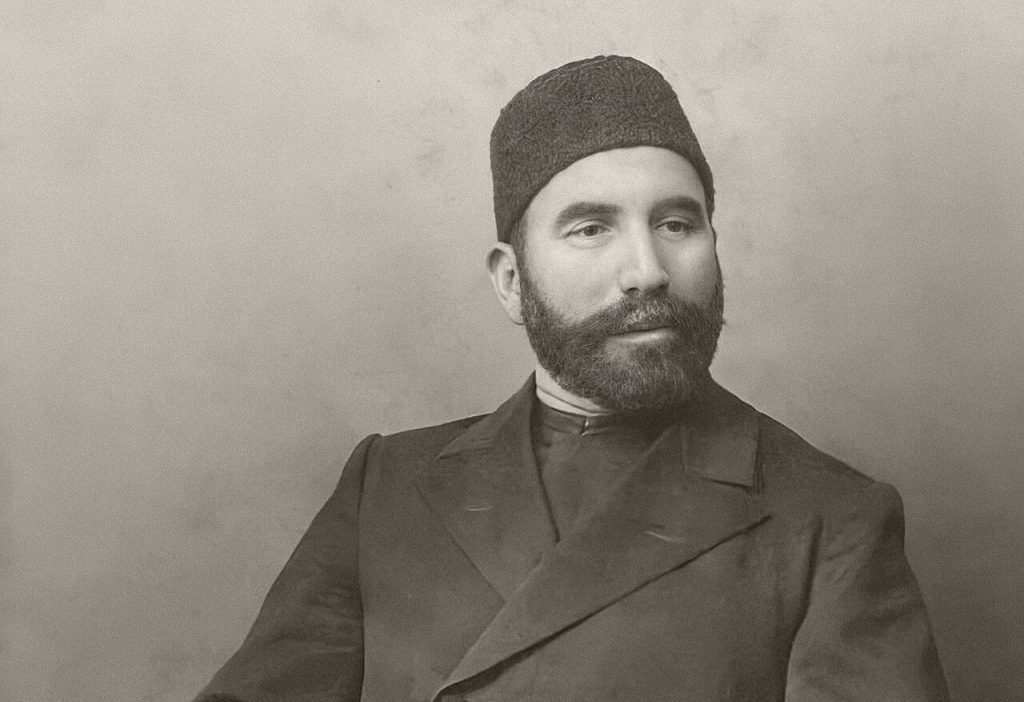
The first secular school for girls in the Muslim East opened in Baku, Azerbaijan. The school was funded by the Azerbaijani millionaire Haji Zeynalabdin Taghiyev. At the time, it was not easy to open such a school for girls in a Muslim country. The local clergy disapproved of the idea of educating girls and incited the public, claiming that this action was a betrayal of religion. However, despite all these difficulties, the school opened on 7 October 1901. Getting there, however, was a battle that took Taghiyev over a decade to win.
Haji Zeynalabdin Taghiyev, who wanted to open a secular school for Muslim girls in Baku, asked Emperor Alexander III for permission, but his request was denied. In 1894, when Nicholas II ascended the Russian throne, Taghiyev once again tried to obtain permission. In 1895, Zeynalabdin Taghiyev attended the coronation of Nicholas II and presented expensive and valuable gifts to Nicholas II and his wife, Alexandra Feodorovna. On this occasion, he reiterated his request, proposing to name the school after the Empress Alexandra Feodorovna. Two years later, he received official approval. With permission granted, Taghiyev, believing the difficult part of the work had been solved, immediately set to work, but several more difficulties lay ahead.
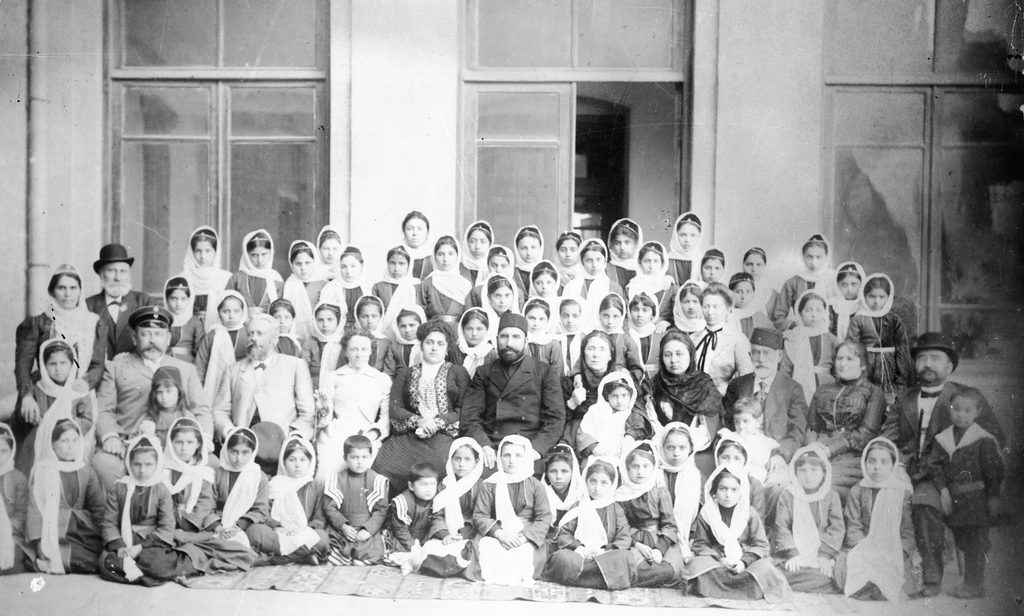
Historical group photograph featuring philanthropist Haji Zeynalabdin Taghiyev, his wife Sona Khanum Taghiyeva, journalist Hasan bey Zardabi, headmistress Hanifa Khanum Malikova, statesman Alimardan bey Topchubashev, and pupils of the Empress Alexandra Baku Muslim Girls’ School.
Permission had been granted, and now it was time to select a suitable site for the school building and begin construction. Despite Taghiyev’s efforts, the Russian imperial administration artificially delayed the solution to the problem. As a result, a considerable amount of time was spent determining the location of the school building. It was decided to build the school next to the site where the Ismailiyya Palace would later stand. In fact, it had originally been planned to build a mosque on the school grounds, but due to various obstacles, this project could not be realised.
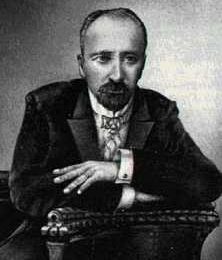
Portrait of I.V. Gosławski, chief architect of Baku (1892–1904), who designed the girls’ school building.
Taghiyev entrusted the construction of the school building to Józef Gosławski, who served as the chief architect of Baku from 1892 to 1904. Gosławski began construction work in 1898, and two years later, the building was ready. Taghiyev spent 183,533 roubles on building the school. Leading intellectuals of the time supported Taghiyev in bringing the school to life.
As mentioned above, Taghiyev faced several difficulties after obtaining permission – one being the Russian imperial authorities’ artificial delay of the work, and the other being the local clergy. The local clerics were opposed to the opening of a secular school for girls.
Outraged by the proposal to educate girls in a secular school, the clerics incited the public against the idea. Conservative clerics threatened families who wanted to enrol their daughters in the school. According to some sources, one progressive Islamic cleric who enrolled his two daughters was killed by a conservative. The old-fashioned, conservative elements of the time also sought to kill Haji Zeynalabdin Taghiyev himself, regarding it as a grave sin for Azerbaijani girls to study at a secular school.
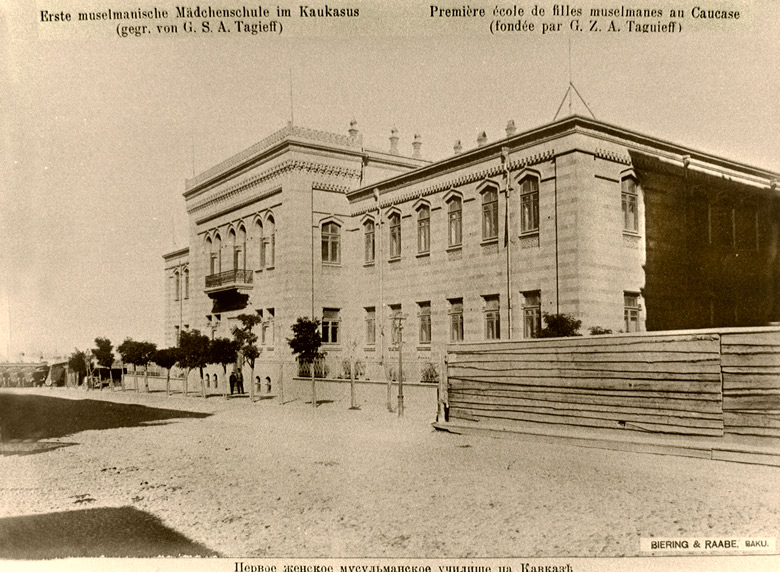
First Muslim girls’ school in the Caucasus, founded by Haji Zeynalabdin Taghiyev, Baku.
Local Muslim authorities continued to oppose the establishment of a secular all-girls school and referred to the teachings of Muslim scholars worldwide. In response, Taghiyev sent representatives to the main places of Islamic worship – Mecca, Medina, Karbala, Mashhad, Cairo, Istanbul and Tehran – to meet with the world’s most prominent Muslim clergy and have them sign a document confirming that Islam did not forbid Muslim girls from studying secular disciplines, just like boys. Mullah Mirza Muhammad returned to the country with the signatures of eight world-renowned Islamic scholars. Taghiyev arranged a meeting with the Baku imams at the mosque, where he presented the signatures and addressed the crowd:
People, it is important that our girls receive a modern education. Their eyes will be opened, and they will cope better with hardship. Molla Ali, son of Haji Khalil, listen! The day before yesterday, your 20-year-old daughter was ill and nearly died. You brought a male doctor; he examined your daughter, gave her medicine, and she was saved from death. Now tell me – if there had been a Muslim female doctor instead of a male one, would that not have been more fitting according to Sharia? We are in dire need of female doctors, female teachers. I decided to open that school after the kingdom called us savages…
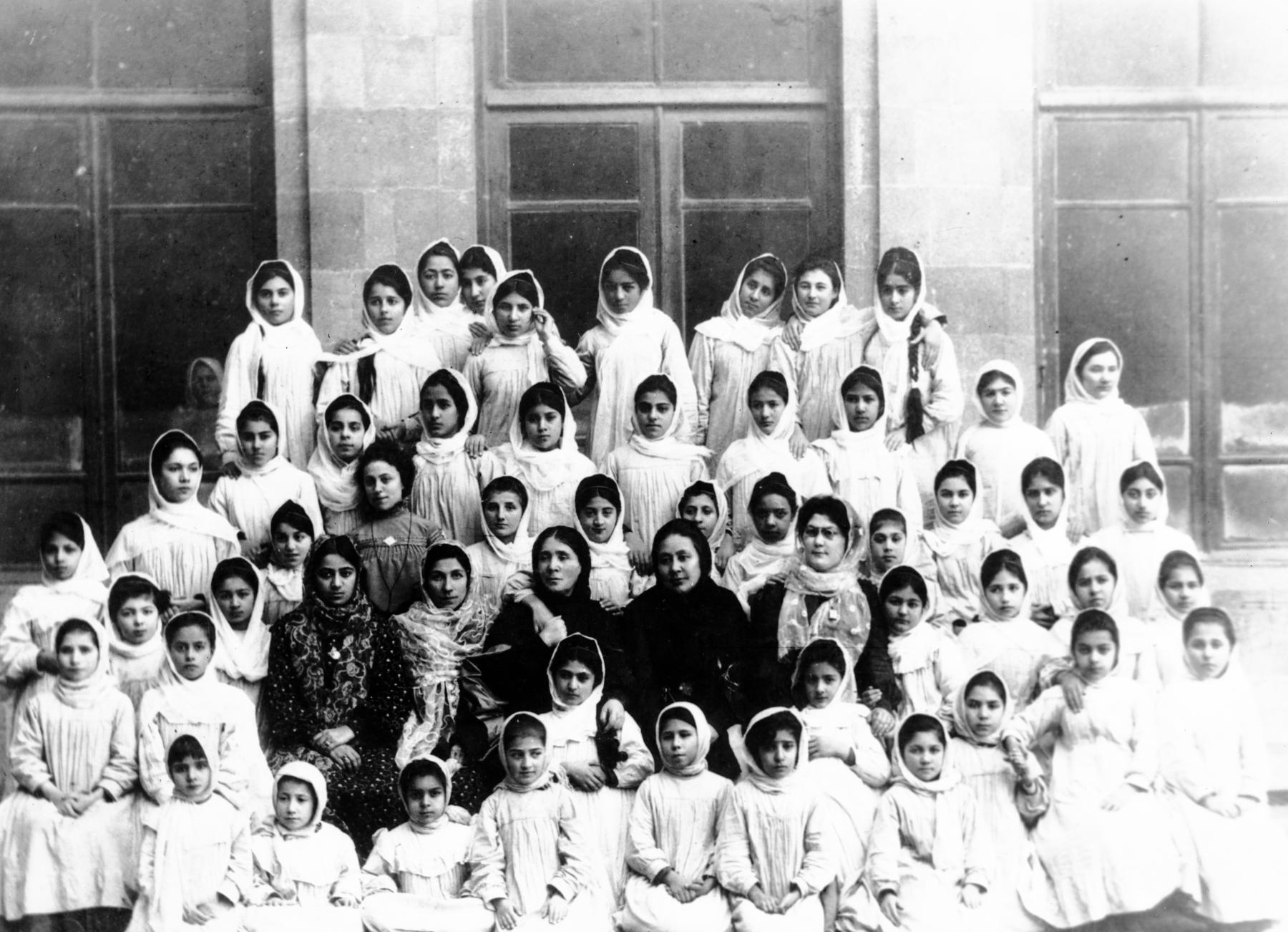
Teachers and pupils of the Baku Russian-Muslim Girls’ School, alongside headmistress Hanifa Khanum Malikova.
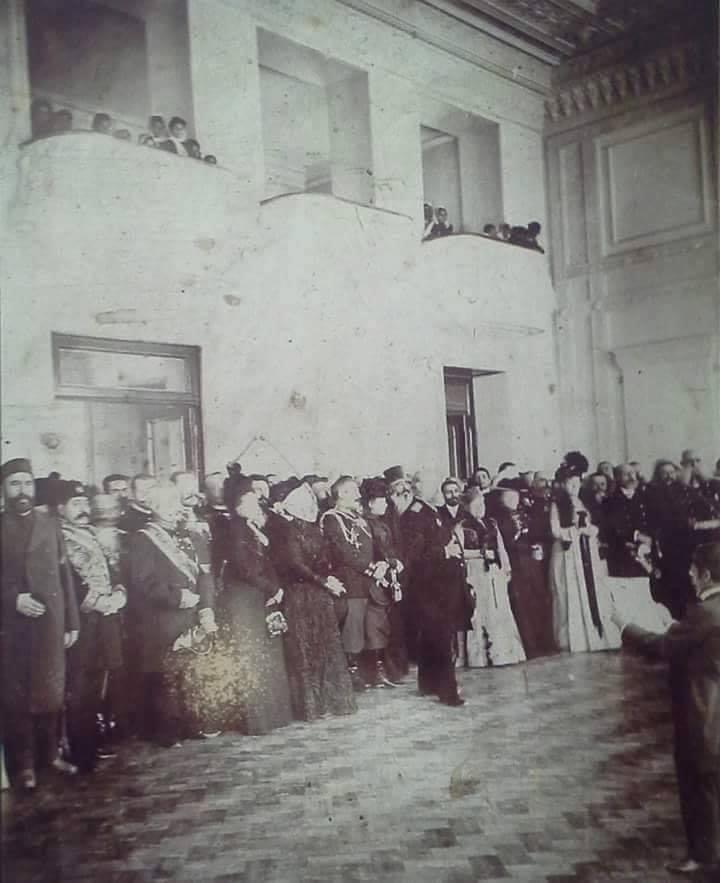
Opening ceremony of the Empress Alexandra Russian-Muslim Girls’ School, with Haji Zeynalabdin Taghiyev (far left) and Ahmad bey Aghayev (far right), who is reading out a congratulatory address from the Muslims of Baku.
Initially, the school was intended to enrol 50 students, 20 of whom were to be educated through Haji’s personal donation. However, the number of applicants exceeded 50 in its very first year. On 7 September 1901, the Empress Alexandra Russian Muslim Boarding School for Girls officially opened with 58 female students – 35 of them from working-class backgrounds. The protests had already subsided, and when the Empress sent a congratulatory telegram to the pupils, opposition ceased entirely.
The entire population of the city gathered for the opening of the school. The newspaper Kaspi described the event as follows: ‘The beautiful mansion on Nikolayevsky Street was decorated with flags. The large hall on the second floor was filled with guests and city dignitaries at 12 noon. After the speeches made about the establishment and construction of the school, a choir of girls who would study at the school performed several Azerbaijani songs. Then the congratulatory telegrams sent to the school were read.’
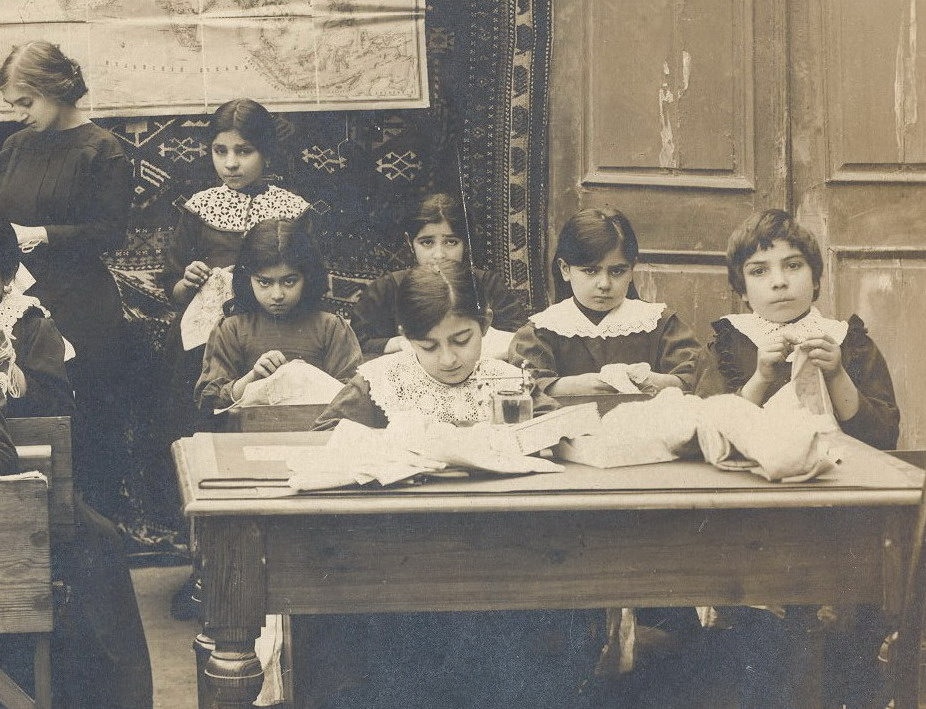
Schoolgirls at a needlework class in the Baku Muslim Girls’ School.
These congratulatory telegrams were among the many letters Taghiyev received from St Petersburg, Kazan, Crimea and Central Asia. With the opening of the Empress Alexandra Russian-Muslim Girls’ School – popularly known as Taghiyev’s Girls’ School – the foundation of secular female education in Azerbaijan was firmly laid.
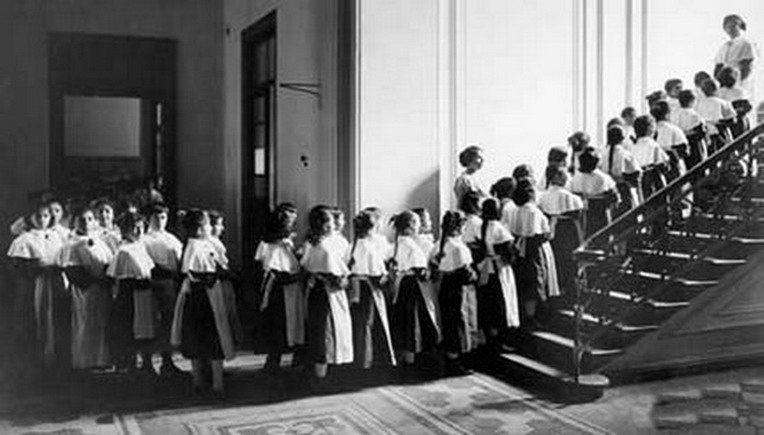
Students of the Baku Muslim Girls’ School lining up on the staircase.
The school provided four years of education. Girls entered the institution at seven years of age and resided on campus. Students wore European-style uniforms featuring white collars and head coverings. Classes were conducted in Russian; however, alongside the Azerbaijani language, pupils were taught mathematics, geography, music, and drama. Furthermore, students received instruction in needlework, domestic science, and religious studies. Over the years, the institution’s reputation grew rapidly. Haji Zeynalabdin Taghiyev donated a substantial sum to secure status as a Girls’ Seminary for the institution, extending its curriculum to a six-year programme.