8 Bizarre Historical Events That Actually Happened
Some of these stories sound like bad jokes or surreal fiction, but they’re very real.
8 Bizarre Historical Events That Actually Happened
Some of these stories sound like bad jokes or surreal fiction, but they’re very real.
By Ricardo Garcia
Published: 11 July 2025
By Ricardo Garcia
Published: 11 July 2025
History is usually associated with wars, monarchs, revolutions, and major inventions. However, tucked away on the dusty shelves of time are events so strange, unexpected, and downright unbelievable that they challenge everything you thought you knew about the past. Some of these stories sound like surreal fiction or elaborate jokes, yet they are very real. From an emperor who tried to appoint his horse to a high office to people buried with bells in case they were still alive—here are eight bizarre historical events that genuinely happened.
8. The Pope Who Gave Birth During a Procession
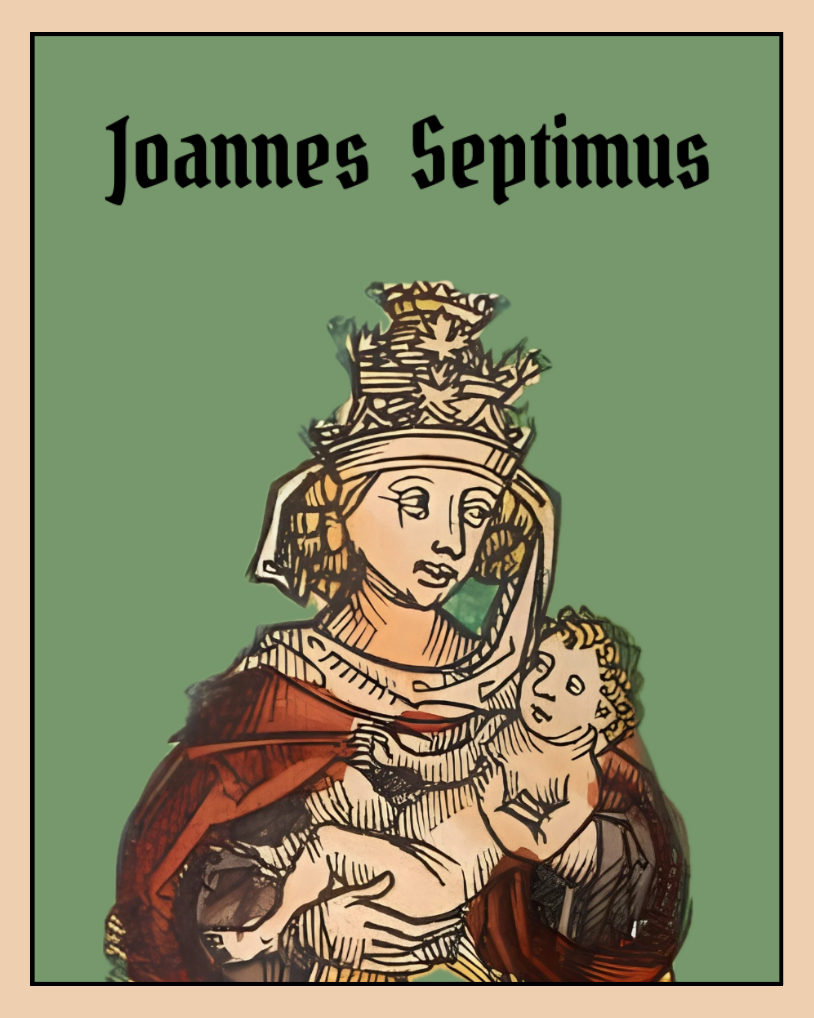
“Joannes Septimus” — a colourised reinterpretation of the original woodcut from the Nuremberg Chronicle, depicting the legendary Pope Joan.
According to medieval accounts, the figure recorded in some chronicles as Pope John VIII was actually a woman named Joan, who had disguised herself as a man to receive an advanced religious education. She rose through the ecclesiastical hierarchy and was eventually elected pope. However, her secret was revealed in the most dramatic way – when she unexpectedly gave birth during a solemn religious procession through Rome.
Legend has it that the outraged crowd stoned her to death on the spot. Although modern historians consider her existence a mythical construct, the story left such a profound impact that, for centuries, newly elected popes were allegedly required to sit on a pierced chair (sella stercoraria) so church officials could verify their male anatomy. Real or not, Pope Joan remains one of the most intriguing figures in Vatican lore.
7. The Dancing Plague of 1518
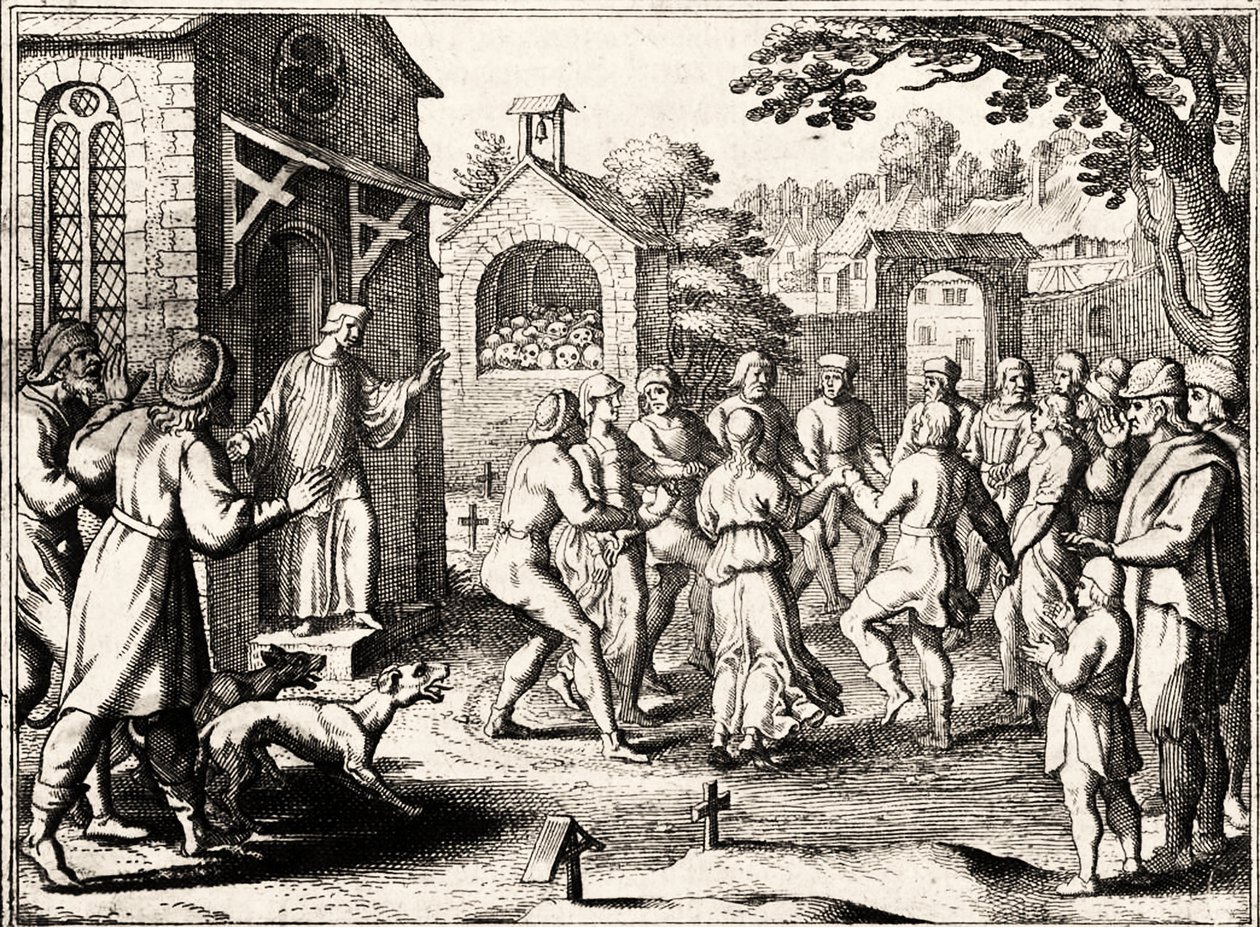
Engraving depicting the Dancing Plague, a mysterious outbreak of compulsive dancing that afflicted parts of medieval Europe.
In July 1518, the residents of Strasbourg (then part of the Holy Roman Empire) were struck by a baffling and terrifying phenomenon: hundreds of people began dancing uncontrollably in the streets – and they could not stop. It started with a woman named Frau Troffea, who danced isolated in the open for six consecutive days. Soon, dozens more joined her, convulsing to music only they could hear.
The strange epidemic lasted for weeks. Dancers collapsed from sheer exhaustion, while others reportedly danced to their deaths due to heart attacks or strokes. Authorities even brought in musicians and constructed a wooden stage, believing that enabling victims to ‘dance the plague away’ would cure them; instead, it only exacerbated the crisis. Modern historians still debate the root cause – ranging from mass psychogenic illness to ergot poisoning caused by toxic rye fungus. Whatever the impulse, it remains one of history’s most baffling collective afflictions.
6. Napoleon Lost a Battle… To Rabbits
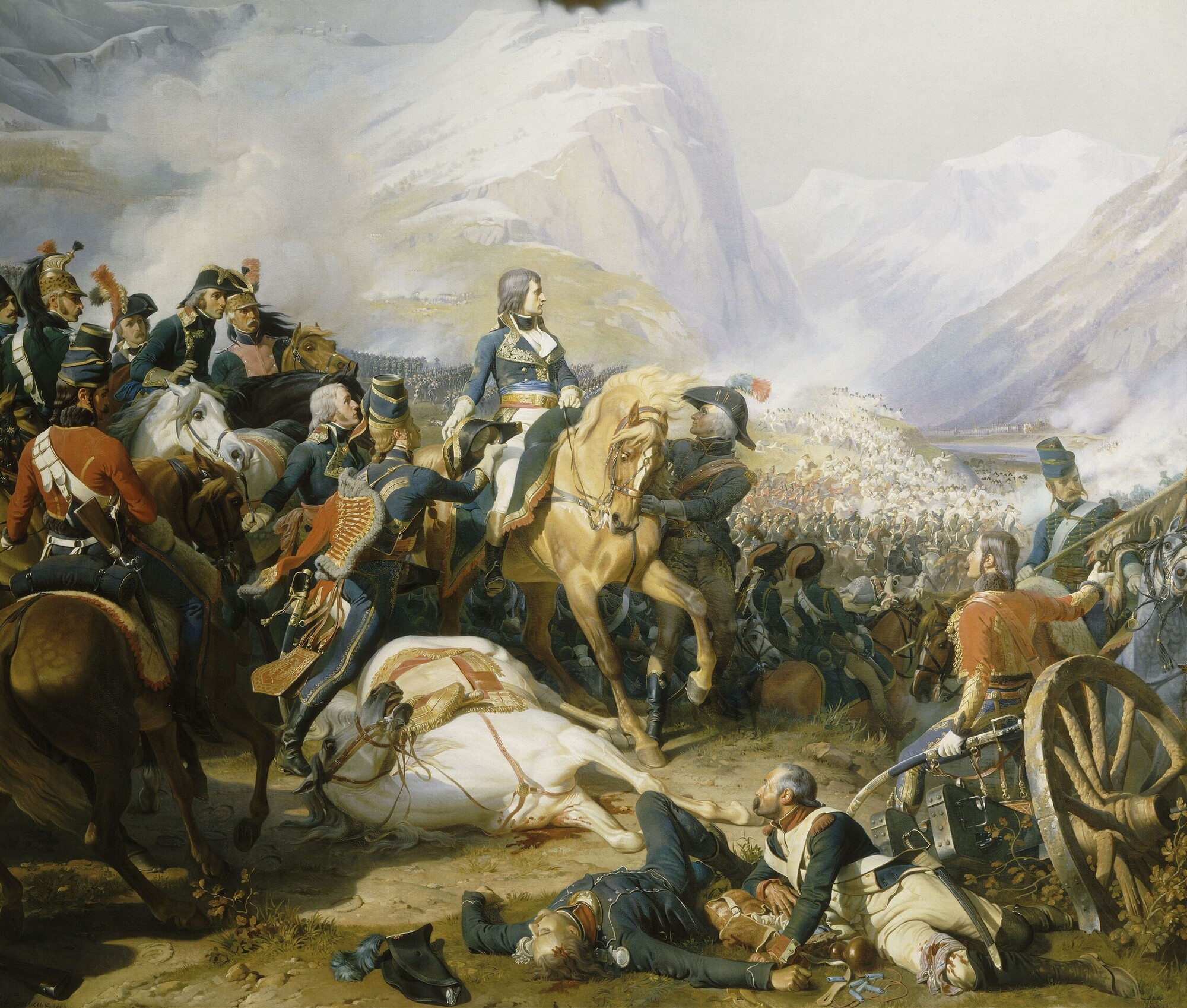
General Bonaparte at the Battle of Rivoli (14 January 1797), painted by Félix Philippoteaux in 1844. Palace of Versailles.
In 1807, after signing the Treaties of Tilsit, Napoleon Bonaparte decided to celebrate his diplomatic success with a grand hunting party. His chief of staff, Alexandre Berthier, was tasked with organising the event. The plan was simple: release hundreds of rabbits into an open field, allow the Emperor and his entourage to hunt them down, and enjoy a leisurely afternoon of sport. However, events took an unexpected turn – primarily because someone made a monumental error in judgment.
Instead of sourcing wild hares, Berthier’s staff had acquired hundreds – possibly thousands – of tame, domesticated rabbits. Unaccustomed to being hunted, these animals did not scatter in fear upon release. Used to human contact and hand-feeding, they instead charged directly towards Napoleon and his party in search of food. Eyewitnesses described a surreal scene in which swarms of rabbits overwhelmed the field, clambered up the Emperor’s trousers, entered his carriage, and forced seasoned imperial guards into a chaotic retreat. Despite claiming victories across Europe, Napoleon was thoroughly routed – by a flurry of fur and floppy ears.
5. Victorian “Safety Coffins” Came with Bells
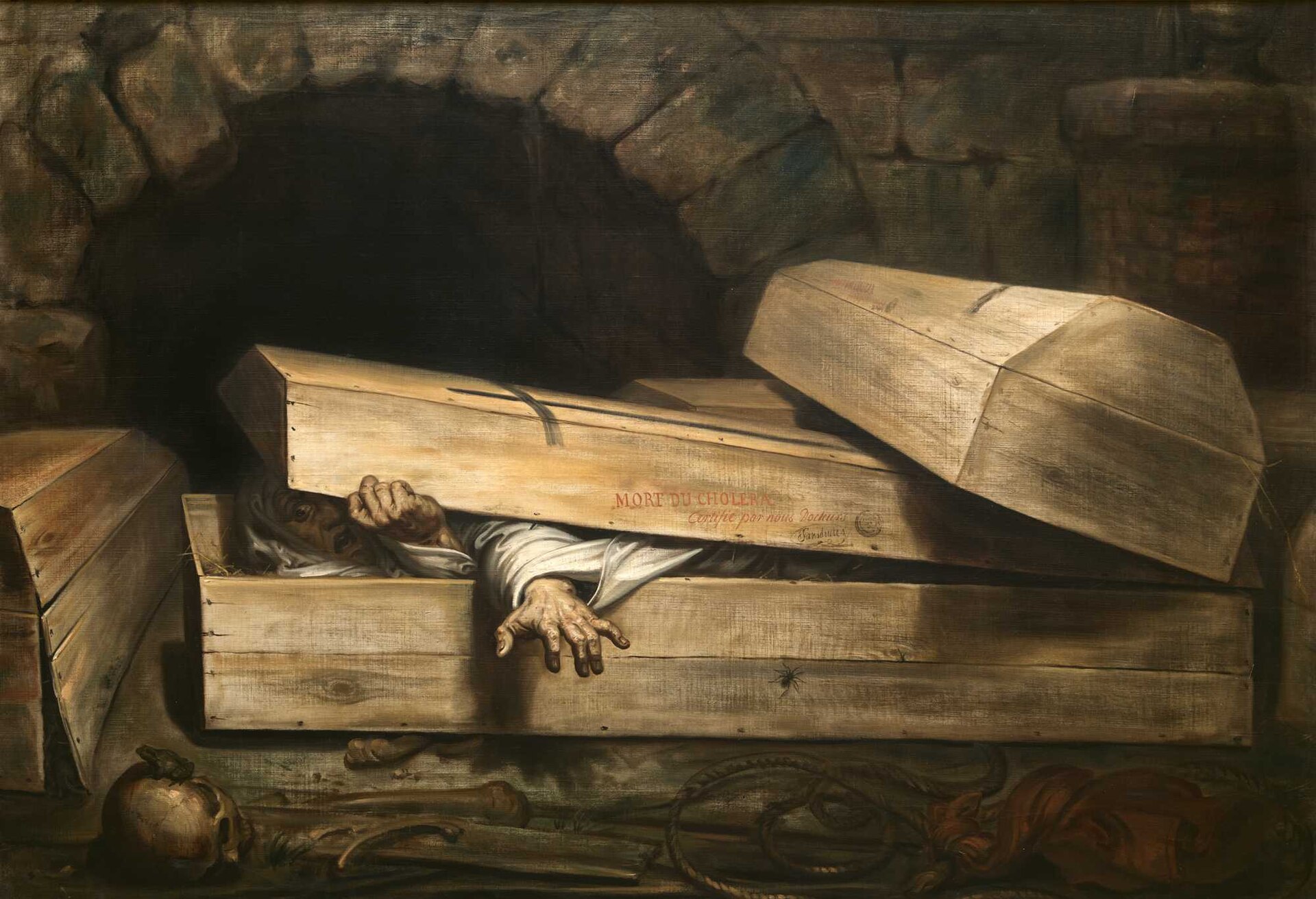
The Premature Burial (1854) by Belgian Romantic painter Antoine Wiertz, depicting the 19th-century horror of being buried alive.
In 18th- and 19th-century Europe, the fear of premature burial – known as taphephobia – was widespread. To address this terrifying prospect, inventors devised a eerie solution: safety coffins equipped with bells. A cord was tied to the deceased’s wrist and routed above ground to a brass bell mounted on the headstone.
If a person inadvertently buried alive regained consciousness, they could pull the cord to signal for rescue. Certain graveyards even employed night watchmen specifically tasked with listening for ringing from below. The popular idiom ‘saved by the bell’ is frequently attributed to this macabre practice – though boxing enthusiasts remain inclined to claim the phrase as their own.
4. Why Sultan Mehmed the Conqueror’s Body Wasn’t Buried for Days
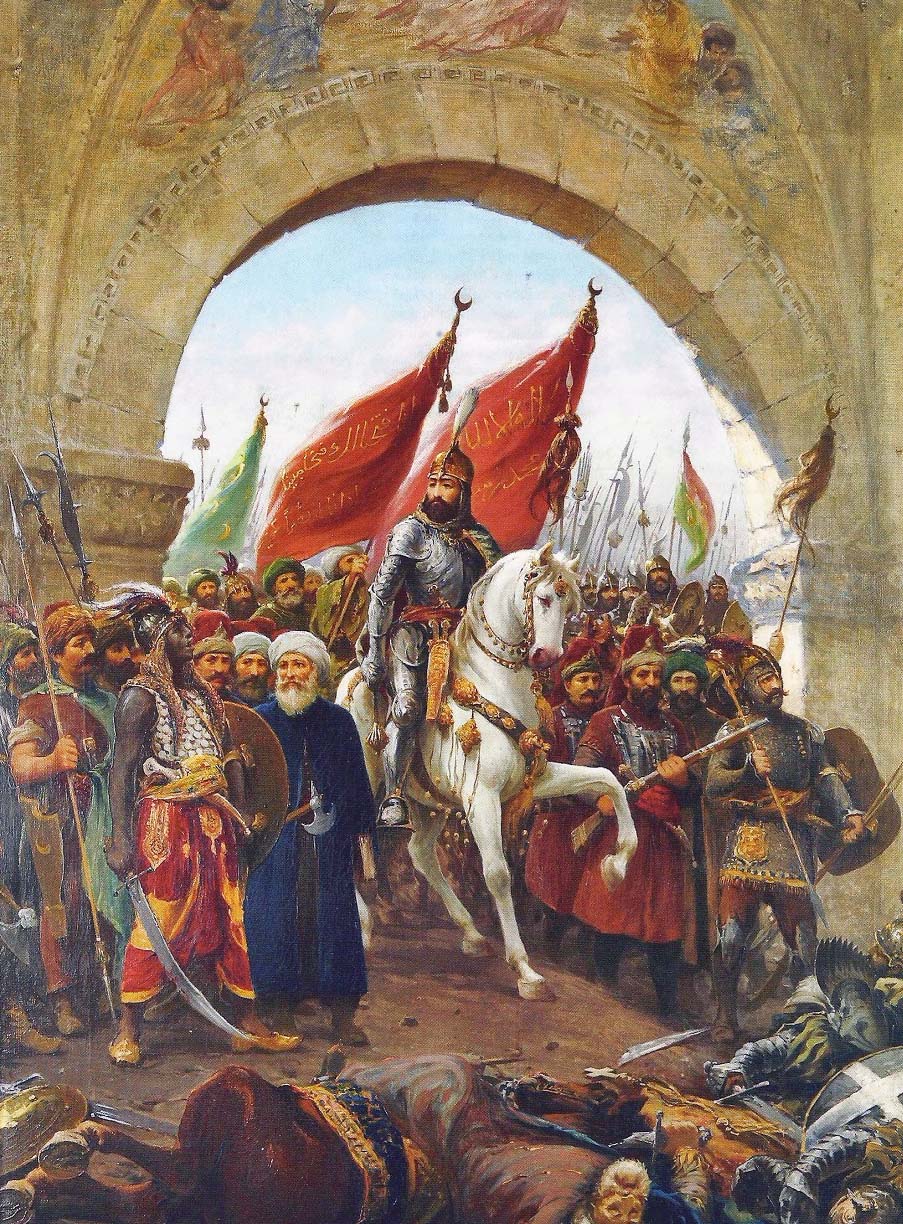
The entry of Sultan Mehmed II into Constantinople, painting by Fausto Zonaro (1854–1929)
When Sultan Mehmed II – known to history as Mehmed the Conqueror – died in May 1481, the Ottoman imperial court kept his death a secret for over a fortnight. The reason was entirely political: a fierce war of succession was brewing between his sons, Bayezid and Cem, and revealing the Sultan’s demise risked triggering immediate civil war across the empire.
To preserve the corpse in the spring heat, royal attendants embalmed the body using vinegar, musk, and ice. While imperial messengers rode frantically across the realm to summon the heirs, Constantinople remained on edge. The ruler who had dismantled the Byzantine Empire was dead – but until a successor arrived in the capital, no one dared to make the news public.
3. The Roman Emperor Who Wanted His Horse in Office
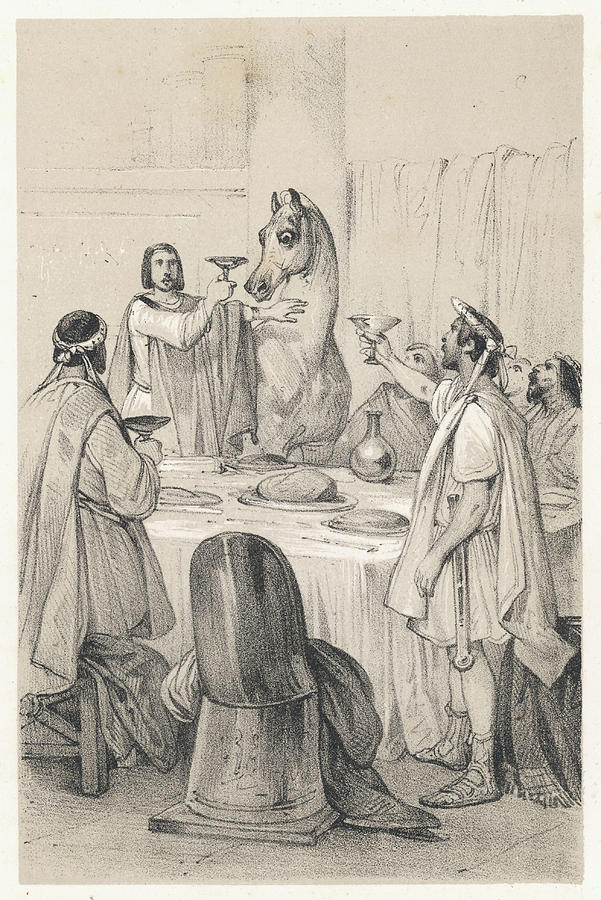
Caligula and Incitatus, drawing by Jean Victor Adam.
Caligula, one of Rome’s most infamous emperors, took imperial eccentricity to new heights. He doted on his favourite racehorse, Incitatus, to such an extent that he provided the animal with a marble stable, an ivory manger, purple blankets, and – allegedly – intended to name him a Roman consul.
Historians continue to debate whether Caligula was genuinely insane or merely executing a caustic satire designed to humiliate the Roman Senate. Regardless of his true motivation, the episode became an enduring symbol of unbridled imperial excess – proving that, for a brief moment in antiquity, a horse held more political weight than the realm’s most powerful statesmen.
2. Animals Were Put on Trial in the Middle Ages
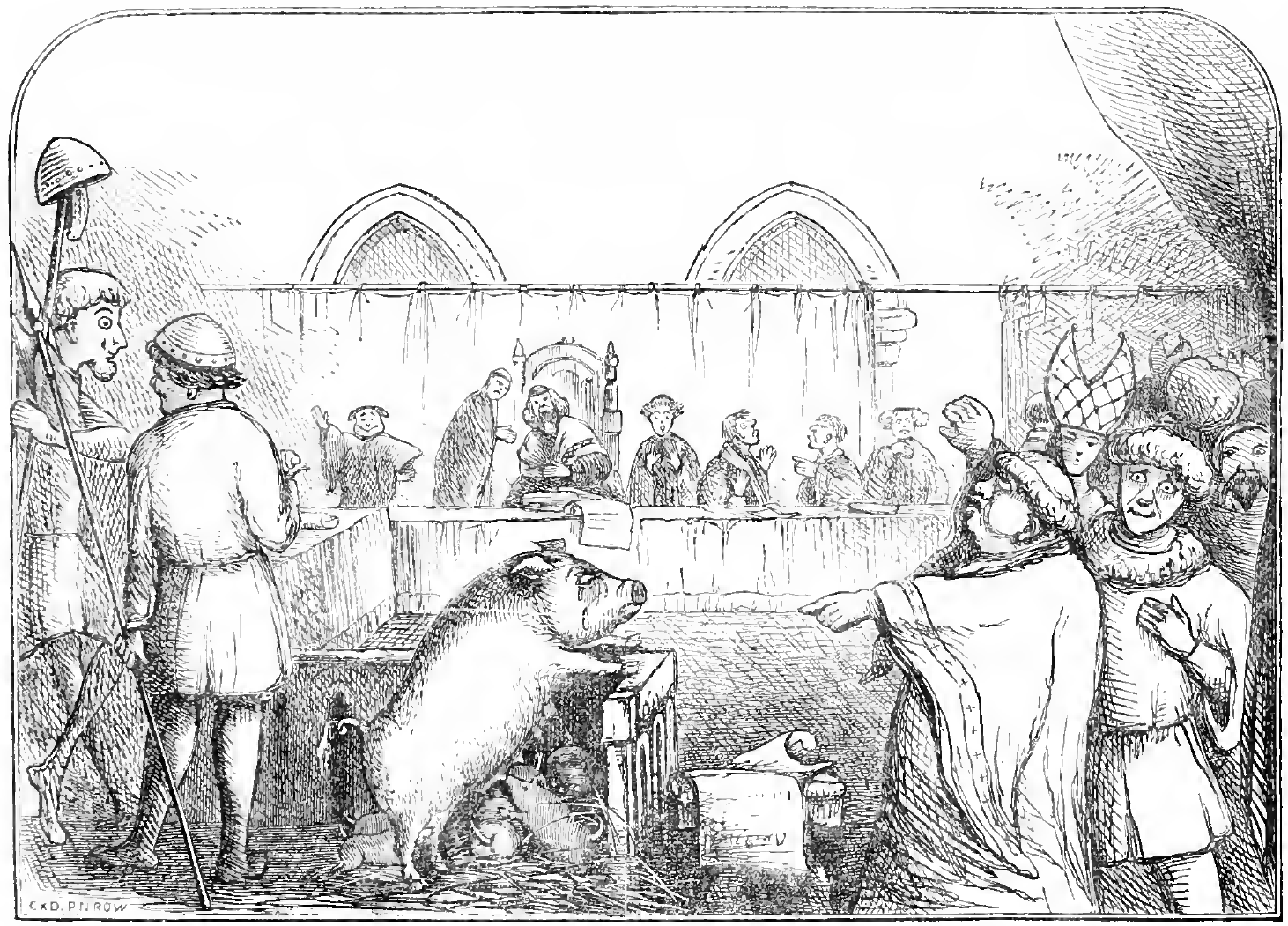
Woodcut from Robert Chambers’s The Book of Days (1864) illustrating the trial of a sow and her six piglets at Savigny in 1457. While the sow was found guilty and executed, her piglets were acquitted due to insufficient proof of complicity.
In medieval and early modern Europe, animals were held legally accountable for crimes alongside human offenders. Pigs, bulls, rats, and even swarms of insects were routinely arrested, tried by judicial tribunals, and formally sentenced. In one notable case in 1457, a sow was executed in Savigny, France, for the murder of a child, while her six piglets were acquitted due to lack of evidence. In another instance, a swarm of locusts was formally summoned to appear in court; when they failed to present themselves, the local bishop excommunicated them in absentia.
These proceedings were conducted with utmost legal gravity, complete with court-appointed defence attorneys, sworn witnesses, and official judicial decrees. It remains a striking reflection of a world where human concepts of moral accountability and justice were extended directly into the natural realm.
1. The Great Potato Riot of 1847
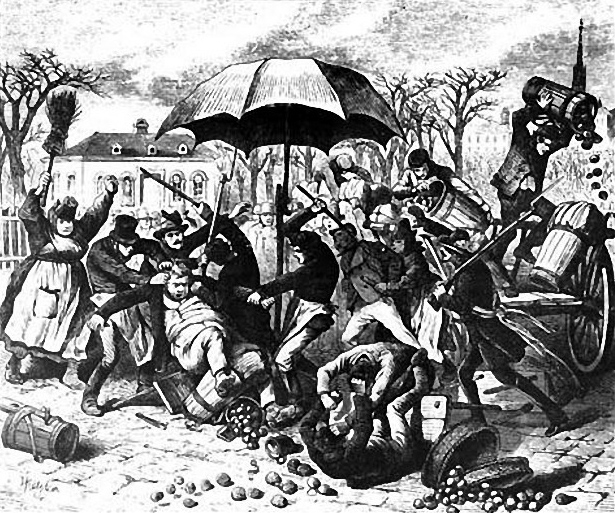
Vinzenz Katzler’s c. 1847 lithograph Sturm auf die Kartoffelstände (‘Storming of the Potato Stalls’) captures the violent civil unrest in Vienna triggered by soaring prices during the European potato crisis of the late 1840s.
In April 1847, following severe crop failures, the price of potatoes in Berlin soared beyond the reach of the working classes. As potatoes were a primary dietary staple, this sudden inflation brought the populace to the brink of starvation. The result was the Potato Revolution (Kartoffelrevolution), in which thousands of citizens poured into the streets to loot market stalls, demand price controls, and clash with armed authorities.
What began as a desperate food riot rapidly escalated into a broader political uprising, widely regarded by historians as a major precursor to the widespread European Revolutions of 1848. It serves as a stark historical reminder that even the humblest vegetable can become the catalyst for mass rebellion.