What Happened in History on April Fools’ Day
From music and sport to cinema and war: discover the remarkable events that shaped society on the 1st of April.
What Happened in History on April Fools’ Day
From music and sport to cinema and war: discover the remarkable events that shaped society on the 1st of April.
By Yusif Babayev
Published: 1 April 2026
By Yusif Babayev
Published: 1 April 2026
Time flies so fast. In the blink of an eye, the day ends. Days pass, turning into weeks; weeks pass, turning into months; months pass, turning into a year. The caravan of time moves, one by one. So fast – frighteningly fast. Unfortunately, we cannot save time in a bottle. It vanishes, just as our childhood did, in the blink of an eye.
Some live in the days of the past, rather than the present. Some minds are full of thoughts about the future. They are not in the present either. Worrying about the future doesn’t change anything for the better; it only destroys our day in the present.
The days of the past… maybe those were truly the best of times. From music to sports, from cinema to art, from technology to society, everything was brilliant. Maybe today lacks quality in music and cinema, legends in sports, joy in technology; maybe society is broken and art has fallen into the shadow. But we should still be in the present, living the best of it. Even if you’re the one that lives in the past rather than the present, just remember: these days will one day be the past days. We should make the best of them, so the cliché ‘Good Old Days’ can live on for future times.
Let us listen to those beautiful old melodies through the tech of joyful times; let us empty our minds from unimportant worries and remember the importance of the day for us. And, of course, on the other hand, let us remember what happened on this day in history. What happened in history on April Fools’ Day? Let us find out.
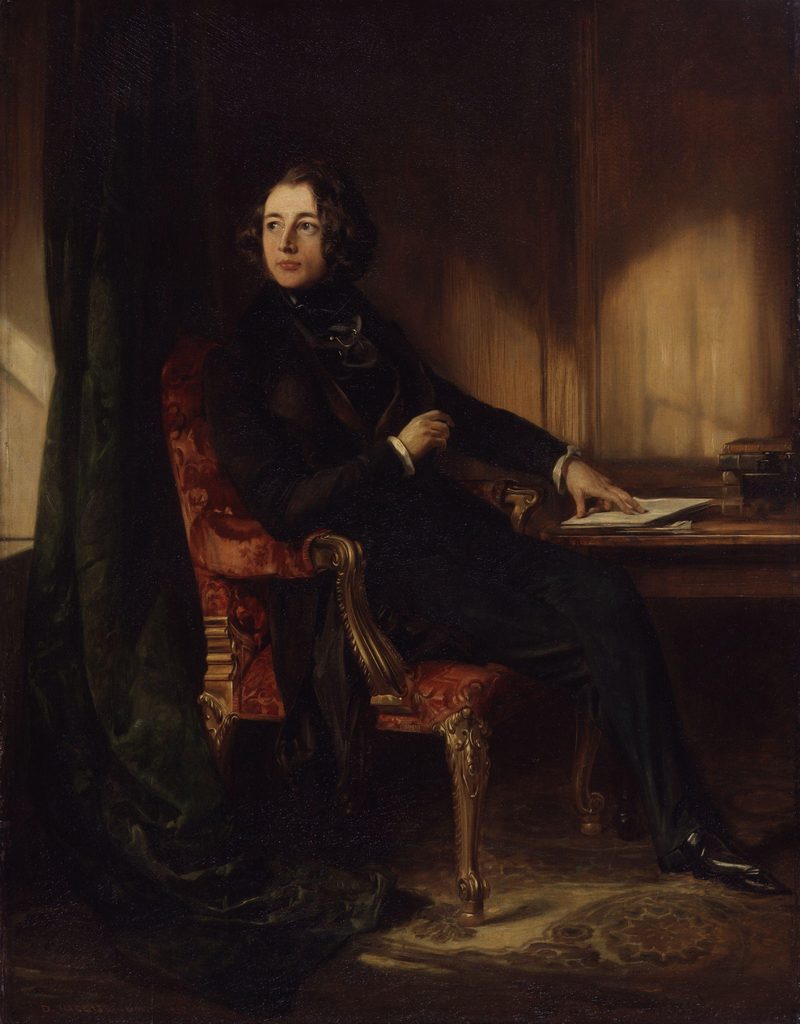
Portrait of Charles Dickens by Daniel Maclise, 1839.
On 1 April 1854, Charles Dickens initiated the weekly serialisation of his tenth novel, ‘Hard Times’, within the pages of his popular journal, Household Words. Written amidst widespread industrial unrest, the work accomplished something profound for Victorian literature: it delivered a scathing, urgent critique of industrial capitalism and the unyielding, fact-obsessed philosophy of Utilitarianism. By contrasting the soul-crushing mechanisation of fictional ‘Coketown’ with the irrepressible humanity and imagination of Sleary’s Circus, Dickens successfully challenged the dehumanising social doctrines of his era, quadrupled the circulation of his journal, and solidified his standing as the premier moral conscience of nineteenth-century Britain.
In 1857, Herman Melville published his final novel, ‘The Confidence-Man: His Masquerade’. The publication date was specifically chosen to coincide with April Fools’ Day, as the narrative itself unfolds entirely aboard a Mississippi steamboat, the Fidèle, over the course of a single April Fools’ Day in 1857.
American Civil War
The Battle of Five Forks
In April 1865, Union troops led by General Philip Sheridan decisively defeated Confederate forces under General George Pickett at the Battle of Five Forks. The victory cut the Army of Northern Virginia’s last supply line during the Siege of Petersburg, forcing Robert E. Lee to abandon the city and Richmond, and setting the stage for the Confederate surrender at Appomattox just over a week later.
In 1867, Singapore was officially established as a British Crown Colony, passing from the administration of the India Office to direct imperial rule under the Colonial Office – a pivotal transition that cemented its status as a vital mercantile hub and naval stronghold in South-East Asia. Seventy years later, on 1 April 1937, the strategic Arabian port city of Aden similarly became a Crown Colony, having previously been governed as part of the Bombay Presidency. Reorganised to safeguard the imperative maritime trade routes connecting Britain to India and the Far East via the Suez Canal, both territories represented crucial nodes in the expansion and consolidation of the twentieth-century British Empire.
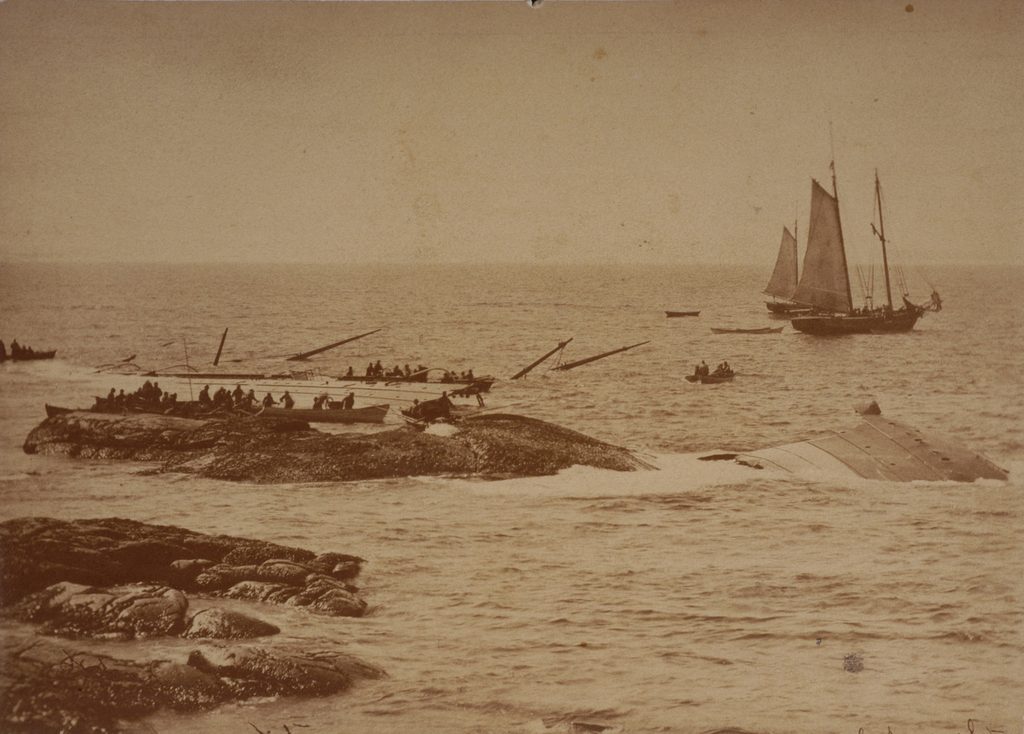
Wreck of the Atlantic during body and cargo recovery, April 1873.
In 1873, the White Star Line’s ocean liner SS Atlantic sank after striking a submerged reef off the coast of Nova Scotia, Canada. En route from Liverpool to New York, the vessel had diverted towards Halifax due to coal shortages when navigation errors led her onto the rocks near Meagher’s Island on 1 April. The catastrophic wreck claimed the lives of 547 passengers and crew, making it one of the most horrific civilian maritime disasters of the nineteenth century – and the deadliest in the history of the White Star Line until the loss of the Titanic thirty-nine years later.
In 1889, the world’s first commercially successful mechanical dishwasher – invented and patented by American socialite Josephine Cochrane – was first advertised and marketed in a Chicago newspaper. Frustrated by the frequent chipping of her fine 17th-century heirloom porcelain during hand-washing, Cochrane designed a hand-cranked machine that utilised pressurized water streams rather than mechanical scrubbers to cleanse tableware. Her revolutionary invention went on to win the top prize for mechanical construction at the 1893 World’s Columbian Exposition in Chicago, laying the foundation for the Garis-Cochran Manufacturing Company, the direct ancestor of modern-day KitchenAid.
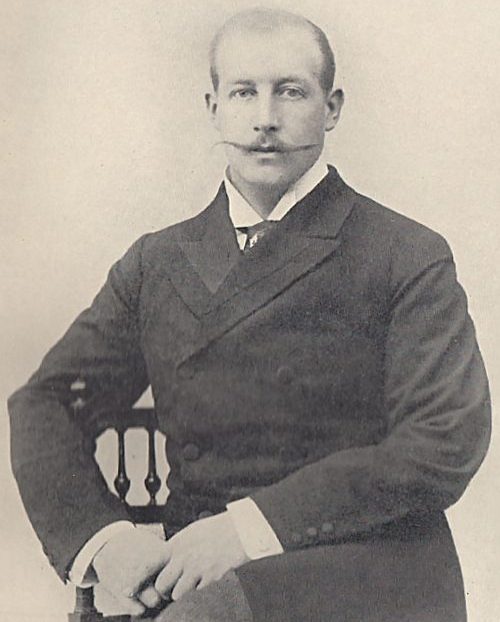
Prince George of Greece, High Commissioner of Crete, in 1902.
In 1900, Prince George of Greece and Denmark consolidated near-absolute executive power as High Commissioner of the autonomous Cretan State. Appointed by the European Great Powers following the island’s liberation from direct Ottoman control in 1898, Prince George governed under an authoritarian constitution that granted him sweeping royal prerogatives – including the sole authority to appoint ministers and enact legislation. His autocratic rule and resistance to unification with Greece (Enosis) eventually provoked widespread opposition, culminating in the Theriso Revolt of 1905 led by Eleftherios Venizelos.
In 1910, Romanian geographer and professor Dumitru Dan set out on an extraordinary 100,000-kilometre expedition around the globe. Prompted by a 100,000-franc prize offered by the Touring Club de France for an around-the-world walk, Dan embarked alongside three fellow students – Alexandru Pascu, Gheorghe Negreanu, and Paul Pârvu – and their faithful dog, Harap, all dressed in traditional Romanian folk attire and folk sandals (opinci). The expedition proved fraught with tragedy, as Dan’s three companions died along the arduous multi-year journey across continents.Interrupted by the outbreak of the First World War, Dan eventually completed his remaining distance years later, claiming the official prize in Paris in 1923 as the sole survivor of the epic endeavor.
Globe-trotter Dumitru Dan in Romanian national costume, 1911.
In 1920, the Anglican Church in Wales was officially disestablished, separating the four ancient Welsh dioceses from the Church of England and dissolving centuries of state ties. Though the groundbreaking Welsh Church Act had been passed by Parliament in 1914 following decades of intense political campaigning by Welsh Nonconformists, its formal implementation was suspended until the conclusion of the First World War. Taking effect on 31 March 1920, disestablishment stripped the Welsh bishops of their seats in the House of Lords and ended state tithe funding, but granted the newly formed Church in Wales complete administrative independence and full spiritual self-governance.
In 1922, amidst the ferocious sectarian violence that accompanied the establishment of Northern Ireland, two horrific massacres took place in rapid succession across Belfast. On 24 March, armed men wearing police uniforms broke into the home of the Catholic businessman Owen McMahon, murdering him, four of his sons, and a family employee in what became known as the McMahon killings. Exactly eight days later, on 1 April 1922, police forces conducted a brutal reprisal spree known as the Arnon Street killings, forcing entry into civilian homes with sledgehammers and slaughtering six Catholic civilians – including a 70-year-old grandfather and an infant – in one of the darkest chapters of early twentieth-century Irish history.
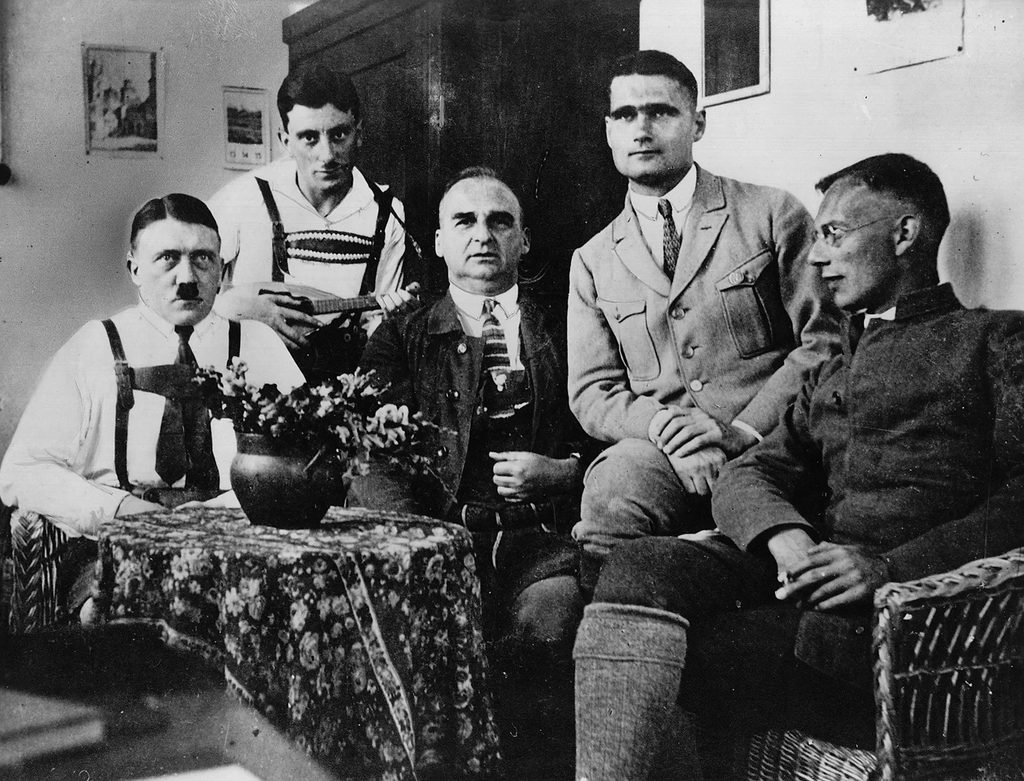
Nazis who participated in the Beer Hall Putsch: Adolf Hitler, Emil Maurice, Hermann Kriebel, Rudolf Hess and Friedrich Weber.
In 1924, two defining yet wholly disparate historical milestones unfolded: on 1 April, Adolf Hitler was sentenced to five years’ imprisonment following his conviction for high treason for his leading role in the failed November 1923 ‘Beer Hall Putsch’. Confined to Landsberg Prison under remarkably lenient conditions, Hitler served merely nine months before his premature release in December 1924 – a period during which he dictated the first volume of his political manifesto, Mein Kampf.
On that very same day, 1 April 1924, the Royal Canadian Air Force (RCAF) was officially established as a permanent element of Canada’s armed forces, receiving royal assent to grant the prefix ‘Royal’ to its military aviation service and cementing its role in national defence, aerial surveying, and imperial security.
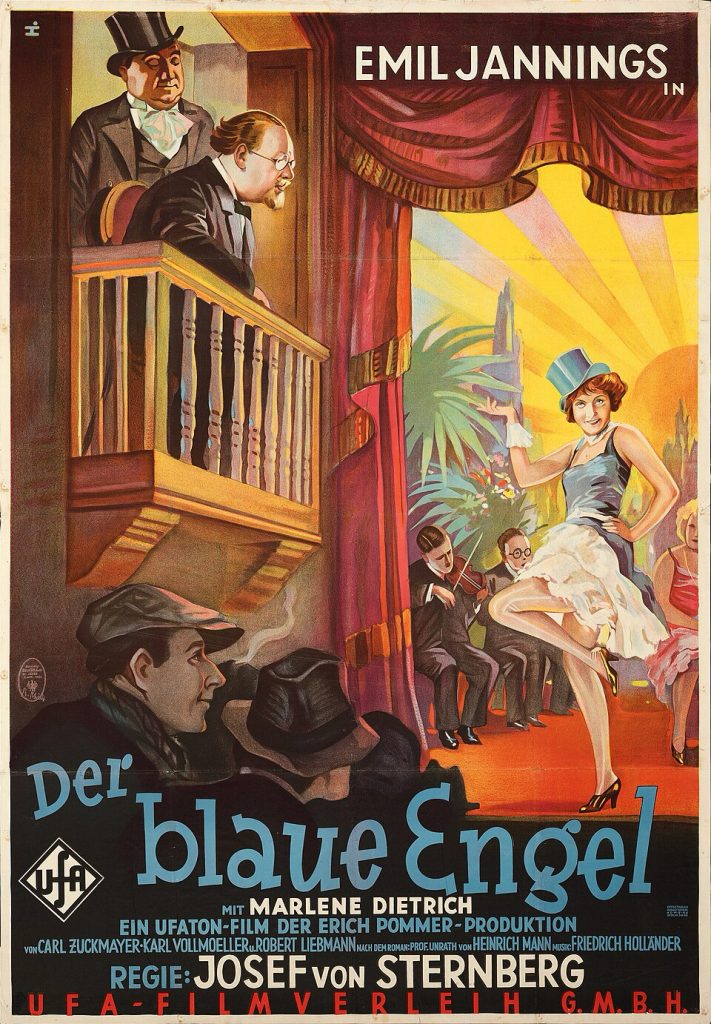
German poster for The Blue Angel (1930)
In 1930, two defining cultural and sporting landmarks unfolded simultaneously on 1 April: in Berlin, Josef von Sternberg’s cinematic masterpiece The Blue Angel (Der blaue Engel) premiered at the Gloria-Palast. Serving as Germany’s first major full-length sound picture, the film catapulted Marlene Dietrich to immediate international stardom through her iconic portrayal of the cabaret singer Lola Lola, forever transforming the landscape of Weimar-era cinema.
Across the Atlantic on that very same day, legendary American amateur golfer Bobby Jones initiated his historic Grand Slam season in breathtaking fashion. Competing at the Forest Hills-Ricker Golf Course in Augusta, Georgia, Jones secured a commanding victory in the Southeastern Open, finishing thirteen strokes ahead of his runner-up, Horton Smith. This decisive performance laid the groundwork for his unprecedented 1930 campaign, in which he achieved the ultimate golf feat by winning all four major championships in a single calendar year.
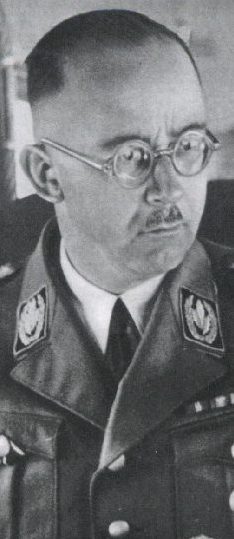
Heinrich Himmler in 1945.
In 1933, two sinister developments unfolded on 1 April that heralded the rapid descent of Germany into total totalitarian control and state-sanctioned racial persecution. On this day, SS leader Heinrich Himmler assumed the role of Police Commander, a critical administrative stepping stone that enabled him to systematically consolidate authority over the Bavarian state police force and begin centralising the nation’s entire police apparatus under SS authority.
Simultaneously, under the direction of the radical anti-Semitic propagandist Julius Streicher, the newly empowered Nazi regime staged its first nationwide, state-sponsored action against the German Jewish population: a one-day boycott of all Jewish-owned businesses, medical practices, and legal chambers. Guarded by armed members of the Sturmabteilung (SA) who stood outside storefronts urging citizens not to buy from Jews, the orchestrated boycott marked the official onset of an escalating series of legislative and economic measures designed to strip Jewish citizens of their livelihoods and rights.
Spanish Civil War
In 1939, Generalísimo Francisco Franco officially announced the end of the Spanish Civil War on 1 April, following the total surrender of the remaining Republican forces and the fall of Madrid days earlier. In a famous, brief radio broadcast known as El último parte (‘The Final Communiqué’), Franco declared from Burgos that the Nationalist army had secured all its military objectives and captured the final Republican strongholds, concluding three years of devastating conflict. This decisive victory marked the collapse of the Second Spanish Republic and inaugurated nearly four decades of Franco’s autocratic dictatorship over the Spanish State.
World War II
On 1 April 1941, a series of pivotal global events unfolded across multiple theatres of political, military, and civilian conflict:
In Europe, the Nazi regime further intensified its systemic persecution of Jewish citizens, formally issuing decrees that forbade Jewish access to public cafés, restaurants, and cultural establishments throughout Germany.
Across the Atlantic, the United States Navy officially took operational control of Treasure Island in San Francisco Bay. Constructed as an artificial landmass to host the 1939 Golden Gate International Exposition, the island was swiftly repurposed into a major naval training station and embarkation depot as the American military prepared for potential involvement in the Second World War.
Across the Atlantic, the United States Navy officially took operational control of Treasure Island in San Francisco Bay. Constructed as an artificial landmass to host the 1939 Golden Gate International Exposition, the island was swiftly repurposed into a major naval training station and embarkation depot as the American military prepared for potential involvement in the Second World War.
Simultaneously in the Middle East, a nationalist military coup d’état broke out in Baghdad. Orchestrated by a faction of pro-Axis officers known as the ‘Golden Square’ alongside politician Rashid Ali al-Gaylani, the coup successfully overthrown the pro-British regent, ‘Abd al-Ilah, installed al-Gaylani as Prime Minister, and set Iraq on a direct collision course with Great Britain.
On 1 April, a sequence of decisive military maneuvers and resistance milestones unfolded across the European and Pacific theatres during the final years of the Second World War:
In 1943, Jan Dieters – a prominent Dutch politician, anti-fascist resistance leader, and core member of the central committee of the underground Communist Party of the Netherlands (CPN) – was arrested in Amsterdam by the Nazi Sicherheitsdienst (SD). Having coordinated clandestine publishing networks and sabotaged occupying forces, Dieters was subjected to severe interrogation before being executed at Kamp Vught the following year.
In 1944, severe navigation errors and blinding cloud cover caused an squadron of United States Army Air Forces B-24 Liberators to accidentally bombard the neutral Swiss border city of Schaffhausen. Mistaking the municipality for the German target city of Ludwigshafen am Rhein, the accidental raid struck railway facilities and residential quarters, killing forty civilians, injuring dozens, and prompting an immediate diplomatic apology and financial restitution from the United States government.
In 1945, three major operations reshaped the final phase of the global war simultaneously on 1 April:
- The Pacific Theatre: The United States Tenth Army launched Operation Iceberg, storming the beaches of Okinawa to engage General Mitsuru Ushijima’s entrenched Thirty-Second Japanese Army. Comprising over 180,000 land troops and supported by a massive Allied naval armada, this assault represented the largest amphibious invasion undertaken in the Pacific Theatre during the entirety of the war.
- Liberation of the Netherlands: Canadian forces, led by the 2nd Canadian Corps, spearheaded a rapid offensive across the eastern Netherlands, successfully liberating the municipalities of Doetinchem, Enschede, Borculo, and Eibergen from German occupation and restoring long-awaited freedom to the region.
- The Fall of the Reich’s Industrial Base: Deep within Germany, the US Ninth Army driving from the north and the US First Army advancing from the south effected a dramatic junction at Lippstadt. This maneuver completely encircled the Ruhr Pocket, trapping Field Marshal Walter Model’s Army Group B within the industrial heartland of the Third Reich – a siege that ultimately culminated in the capture of over 317,000 German soldiers.
In 1946
On 1 April 1946, two momentous events – one a seismic labor conflict and the other a natural catastrophe – unfolded with far-reaching consequences:
In the United States, John L. Lewis, the formidable president of the United Mine Workers of America (UMW), led 400,000 bituminous coal miners out on a massive, nationwide strike. Demanding improved health benefits, heightened safety regulations, and higher wages, the walkout instantly paralysed American coal production, severely disrupting steel manufacturing, rail transport, and power generation. The resulting energy crisis gripped the nation for over six weeks, ultimately driving President Harry S. Truman to seize control of the mines under federal authority to force a settlement.
Simultaneously in the Pacific Ocean, a powerful $8.6\ M_w$ megathrust earthquake struck near Unimak Island in the Aleutian Islands chain off Alaska, triggering a devastating trans-Pacific tsunami. While the quake itself registered a maximum Mercalli intensity of VI (Strong) locally, the resulting ocean waves surged across the sea at over 500 miles per hour, striking the Hawaiian Islands with tremendous force. The surge caused horrific destruction, particularly in the city of Hilo, claiming 165 lives and devastating coastal infrastructure – a disaster that directly prompted the creation of the Pacific Tsunami Warning Center.
In 1947
On 1 April 1947, two distinct milestones in naval history and popular culture unfolded simultaneously:
In New Zealand, the only mutiny in the history of the Royal New Zealand Navy (RNZN) broke out at the HMNZS Philomel naval base in Devonport, Auckland. Frustrated by systemic pay disparities, poor living conditions, and the post-war reduction of allowances, over one hundred sailors refused duty and walked off the base. The industrial action swiftly spread to several vessels, ultimately forcing the government to address naval pay structures while leading to the discharge of dozens of participating personnel.
In Japan, the publication of Shin Takarajima (‘New Treasure Island’) – created by a young Osamu Tezuka in collaboration with writer Shichima Sakai – revolutionized the comic book medium. Printed in the standalone tankōbon book format, Tezuka’s pioneering work introduced dynamic, cinematic pacing and visual techniques inspired by Western film editing. Selling over 400,000 copies, it sparked the post-war manga explosion and earned Tezuka his enduring reputation as the ‘Father of Manga’.
In 1948
On 1 April 1948, three pivotal developments in modern astrophysics, Cold War geopolitics, and Nordic governance unfolded:
In the scientific community, the prestigious journal Physical Review published ‘The Origin of Chemical Elements’, a groundbreaking paper authored by physical cosmologists Ralph Alpher and George Gamow alongside nuclear physicist Hans Bethe. Known famously as the Alpher–Bethe–Gamow paper (a playful authorial pun devised by Gamow to mirror the first three letters of the Greek alphabet: $\alpha$, $\beta$, $\gamma$), the work laid the theoretical foundation for Big Bang nucleosynthesis – explaining how the light elements of the early universe were created shortly after its inception.
In occupied Germany, Soviet forces intensified political and logistical pressure on the Western Allies in response to the unilateral introduction of the Deutsche Mark in the western occupation zones. On 1 April, Soviet authorities began enforcing strict military transport checks and restricting Allied road and rail access to West Berlin. This confrontational maneuver marked the onset of the ‘Little Berlin Blockade’, serving as the immediate precursor to the complete Soviet land blockade and the historic Berlin Airlift that commenced later that summer.
In the North Atlantic, the Faroe Islands officially achieved self-governing autonomy from the Kingdom of Denmark under the passage of the Faroese Home Rule Act. Following years of wartime separation and growing regional identity, the legislation granted the archipelago internal political sovereignty, recognizing Faroese as the national language and establishing the ancient Løgting as a modern home-rule parliament, while Denmark retained responsibility for foreign affairs and national defence.
On 1 April, a collection of significant political insurgencies, broadcast milestones, and space-age breakthroughs took place across mid-twentieth-century history:
In 1955, the Cyprus Emergency erupted as the clandestine Greek Cypriot nationalist organisation EOKA (Ethniki Organosis Kyprion Agoniston), led by Colonel Georgios Grivas, launched a series of coordinated bomb attacks against British military and administrative targets across the island. Seeking an end to British colonial rule and advocating for Enosis – the political union of Cyprus with Greece – the 1 April campaign initiated four years of intense guerrilla warfare that ultimately led to Cypriot independence in 1960.
In 1957, two contrasting events occurred in Europe:
- Broadcast History: The BBC current-affairs programme Panorama aired its legendary three-minute April Fools’ Day report on the ‘Swiss Spaghetti Harvest’. Narrated with grave authority by distinguished broadcaster Richard Dimbleby, the spoof feature depicted a Swiss family harvesting spaghetti strands directly from trees following a mild winter and the eradication of the ‘spaghetti weevil’. Millions of British viewers were famously duped, making it one of the most famous and successful television hoaxes in history.
- Political Reprisals: In Budapest, the Soviet-installed government of János Kádár formally initiated a series of severe trials against political and military leaders of the crushed 1956 Hungarian Revolution. The court proceedings laid the groundwork for systematic judicial reprisals, culminating in the execution and imprisonment of hundreds of freedom fighters, including former Prime Minister Imre Nagy.
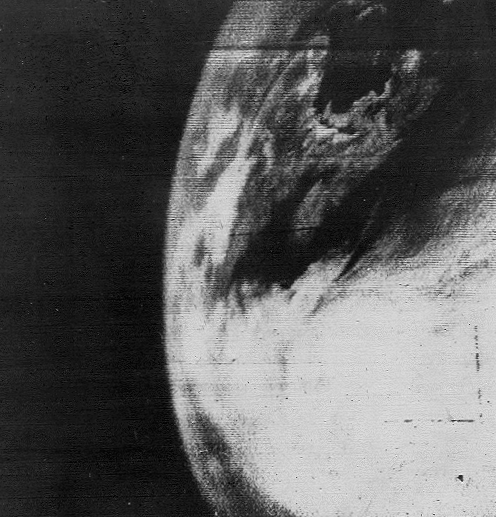
TIROS-1 wide-angle image taken on 1 April 1960, one of the first television images of Earth from space.
In 1960, NASA launched TIROS-1 (Television Infrared Observation Satellite) from Cape Canaveral, Florida. Weighing just 270 pounds, the satellite successfully transmitted the first television image of Earth’s weather patterns from space later that day, revolutionising global meteorology and proving the immense practical value of space-based observation systems.
Music World
What about the music world?
What happened on this day in the history of music?
- 1725: In Leipzig, Germany, Johann Sebastian Bach’s monumental sacred work, the Easter Oratorio (Kommt, eilet und laufet, BWV 249), received its premiere performance at the Nikolaikirche on Easter Sunday. Originally adapted from a secular pastoral cantata, the composition was subsequently revised by Bach over successive decades into one of his most beloved choral works.
- 1964: Beatle John Lennon was unexpectedly reunited with his estranged father, Alfred ‘Freddie’ Lennon, at the NEMS management offices in London – seventeen years after Freddie had abandoned the family when Lennon was merely five years old.
- 1966: Soul duo Sam & Dave released their landmark single Hold On, I’m Comin’ on Stax Records. Written by Isaac Hayes and David Porter, the track became an immediate crossover success and an enduring classic of the Memphis soul sound.
- 1970: John Lennon and Yoko Ono staged an elaborate April Fools’ Day hoax by issuing a joint press statement falsely claiming they were undergoing simultaneous dual sex-reassignment surgeries, satirising the tabloid press’s relentless intrusion into their marriage.
- 1984: The music world was plunged into mourning when soul icon Marvin Gaye was tragically shot to death by his father, Marvin Gay Sr., following a violent domestic argument at their residence in Los Angeles, California – occurring just one day before the singer’s forty-fifth birthday.
- 1992: Rock musician Billy Idol was sentenced in Los Angeles to two years’ probation and ordered to pay $2,700 in fines after pleading no contest to assault charges stemming from a December 1991 incident. The court additionally ordered Idol to undergo drug and alcohol rehabilitation and produce a one-minute public service announcement on the dangers of substance abuse.
- 2002: Legendary R&B singer Luther Vandross released Stop to Love, a major compilation album showcasing his defining chart successes and classic soul ballads.
- 2017: Singer-songwriter Bob Dylan officially received his 2016 Nobel Prize in Literature at a private, intimate ceremony in Stockholm, accepting the medal and diploma from members of the Swedish Academy ahead of a scheduled concert performance in the city.
Cigarette Advertisement Banned
In 1970, a historic turning point in public health legislation and broadcast regulation unfolded on 1 April when United States President Richard Nixon signed the Public Health Cigarette Smoking Act into law. Following five years after the United Kingdom’s landmark 1965 ban on television cigarette commercials, the American legislation banned all cigarette advertisements from airing on domestic television and radio networks starting 2 January 1971 – deliberately permitting tobacco manufacturers one final day of broadcast marketing during the heavily viewed New Year’s Day college football bowl games.
In addition to clearing the airwaves of commercial promotion, the act strengthened the mandatory health warning printed on every packet sold within the United States. Replacing the earlier, weaker 1965 caution (‘Caution: Cigarette Smoking May Be Hazardous to Your Health’), the new law enforced an unequivocal warning from the nation’s top medical officer: ‘Warning: The Surgeon General Has Determined That Cigarette Smoking Is Dangerous to Your Health.’
On 1 April 1976, Steve Jobs, Steve Wozniak, and Ronald Wayne executed a formal partnership agreement in Los Altos, California, to establish Apple Computer Company. Operating out of the garage of Jobs’s adoptive parents, the trio sought to market Wozniak’s hand-built Apple I single-board microcomputer. Although Wayne famously relinquished his ten per cent equity stake merely twelve days later for $800, Jobs and Wozniak laid the groundwork for what would rapidly evolve into one of the most transformative technology enterprises in human history.
Exactly one year later, on 1 April 1977, American humorist, author, and radio personality Jean Shepherd concluded his legendary, long-running overnight broadcast on New York City’s WOR-AM after more than twenty-two years on air. Renowned for his sprawling, unscripted monologues, satirical observations, and vivid autobiographical storytelling – which later formed the basis for the classic 1983 film A Christmas Story – Shepherd’s final radio sign-off marked the poignant conclusion of a golden era in spoken-word American broadcasting.

The late-1970s media landscape transformed once more on 1 April 1979 when Warner Cable officially launched Nickelodeon as the first national basic cable television network dedicated entirely to children’s and youth programming. Evolving out of the local interactive Pinwheel show created for QUBE cable systems in Ohio, the channel debuted nationwide with commercial-free educational broadcasts, embarking on a trajectory that would define the media landscape for successive generations of young viewers.
Sports World
On 1 April, a collection of historic triumphs, record-breaking performances, and sudden tragedies reshaped the international sporting landscape across successive decades:
- 1931: Seventeen-year-old pitcher Jackie Mitchell signed a professional contract with the Chattanooga Lookouts Class AA baseball club, becoming only the second female player in organised baseball history following Lizzie Arlington in 1898. Signed by team owner Joe Engel, Mitchell’s historic debut was thrust into the national spotlight when she famously struck out baseball legends Babe Ruth and Lou Gehrig back-to-back during an exhibition match against the New York Yankees just one day later.
- 1993: The motorsport community was plunged into mourning when reigning 1992 NASCAR Winston Cup champion Alan Kulwicki was tragically killed in a plane crash near Tri-Cities Regional Airport in Blountville, Tennessee. Travelling in a private aircraft alongside executive personnel en route to the Food City 500 at Bristol International Raceway, the thirty-eight-year-old driver and team owner left behind an extraordinary legacy as one of the few independent driver-owners to claim NASCAR’s premier championship.
- 1995: Blackburn Rovers striker Chris Sutton scored what was then the fastest goal in Premier League history, netting after just 12.94 seconds against Everton at Goodison Park. Sutton’s rapid strike spearheaded a 2–1 victory that proved vital in securing Blackburn’s historic 1994–95 Premier League title, standing as the top-flight record for four years and remaining one of the fastest goals ever recorded in modern English football.
- 2000: American heavyweight boxer Chris Byrd captured the WBO Heavyweight Championship in Berlin under astonishing circumstances after unbeaten Ukrainian champion Vitali Klitschko was forced to retire on his stool at the end of the ninth round due to a debilitating torn rotator cuff in his shoulder – handing Byrd an unexpected technical knockout victory despite Klitschko having comfortably led on all three scorecards.
- 2007: At the World Aquatics Championships in Melbourne, American swimming titan Michael Phelps capped an unprecedented individual campaign by shattering his own world record in the 400-metre individual medley. Touching the wall in $4\text{:}06.22$, Phelps smashed his previous benchmark to claim his seventh gold medal of the tournament – a heroic performance that cemented his status as the most dominant force in international swimming history.
- 2026: In Europe, four-time world champions Italy suffered a catastrophic defeat, failing to qualify for the World Cup finals for an unprecedented third consecutive tournament following a agonizing penalty shootout loss to Bosnia and Herzegovina. The defeat plunged Gli Azzurri into renewed national soul-searching, compounding the lingering anguish of missing both the 2018 and 2022 editions. Conversely, in South America, Iraq achieved a monumental triumph by overcoming Bolivia 2–1, securing their place at the World Cup for the first time in forty years. The historic victory ended a four-decade hiatus dating back to their sole previous appearance at Mexico 1986, sparking widespread celebration across the nation—though significant diplomatic questions remain as to whether the tournament’s controversial host administration will grant the necessary entry visas to the Iraqi squad.
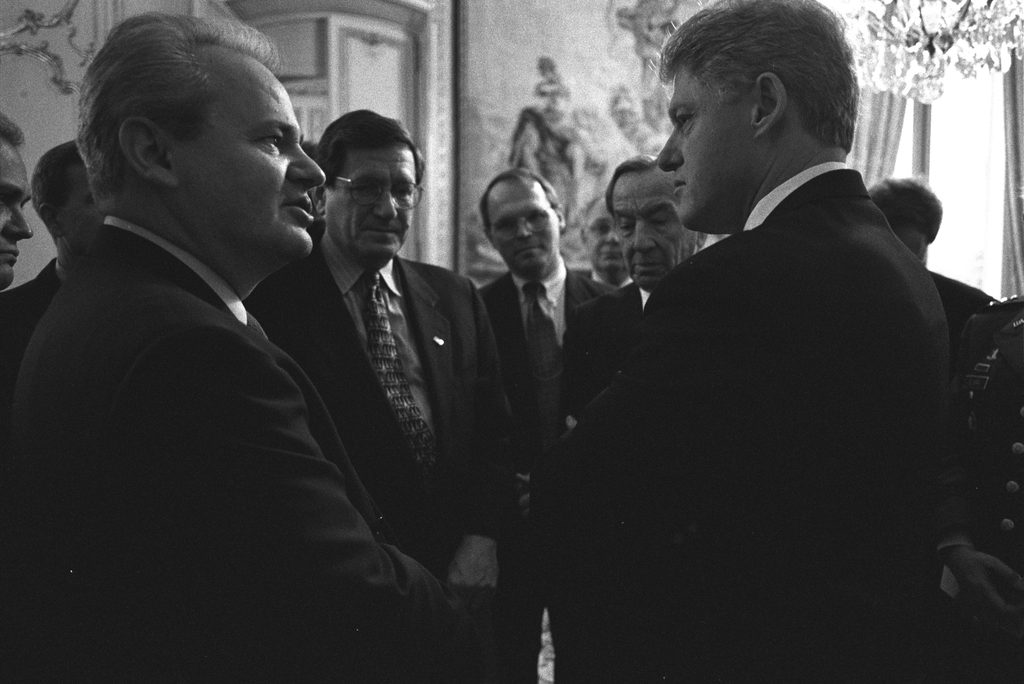
Milošević meets with US President Bill Clinton in Paris on 14 December 1995.
On 1 April 2001, former President of the Federal Republic of Yugoslavia Slobodan Milošević surrendered to Serbian police special forces following a tense, thirty-six-hour armed standoff at his Belgrade residence. Indicted by the International Criminal Tribunal for the former Yugoslavia (ICTY) for war crimes, crimes against humanity, and genocide connected to the brutal conflicts in Bosnia, Croatia, and Kosovo, Milošević’s arrest marked a monumental turning point in post-Cold War international justice and led to his eventual extradition to The Hague.
Three years later, on 1 April 2004, technology titan Google officially launched Gmail, introducing a revolutionary webmail service that offered users an unheard-of 1 gigabyte of free storage alongside advanced search capabilities. Because the service was unveiled on April Fools’ Day with a storage capacity roughly five hundred times greater than that of market rivals Hotmail and Yahoo! Mail, the public initially received the announcement as a sophisticated media hoax before recognizing it as a landmark event in cloud computing.
Tragedy struck the international diplomatic community on 1 April 2011 when a violent mob attacked the United Nations Operations Centre in Mazar-i-Sharif, Afghanistan. Ignited by furious protests over the burning of a Quran by a radical church group in the United States, thousands of demonstrators overwhelmed the security perimeter, storming the compound and killing fourteen people – including three foreign UN military observers, four foreign civilian contractors, and seven local protesters – in one of the deadliest single attacks on United Nations personnel in the nation’s history.
On 1 April 2013, two starkly contrasting events in global security and technological innovation occurred. In Tikrit, Iraq, a devastating suicide bombing targeted a security checkpoint, killing nine people and injuring dozens in a renewed wave of insurgent violence. On the same day in Japan, researchers at the Tokyo University of Agriculture and Technology unveiled a prototype ‘smelling’ television screen. Utilizing micro-streams of air driven by small fans at the display’s edges, the innovative system precisely directed localized scents to match on-screen visuals, creating an immersive olfactory viewing experience.
Tragedy struck off Russia’s eastern coast on 1 April 2015 when the Russian freezer trawler Dalniy Vostok sank rapidly in the icy waters of the Sea of Okhotsk, off the Kamchatka Peninsula. Carrying a crew of 132 international mariners, the vessel flooded and capsized within minutes, resulting in the loss of fifty-seven lives and initiating a vast maritime rescue operation that saved sixty-three survivors.
On the night of 1–2 April 2016, a monumental turning point in South Caucasus history began when Armenian armed forces subjected Azerbaijan’s frontline military positions and civilian residential settlements to heavy artillery fire. In immediate response to these provocations, the Azerbaijani Army launched a swift, large-scale counter-offensive operation. Known as the April War, the four-day military conflict saw Azerbaijani forces break through heavily fortified enemy positions to liberate strategic heights – including the high ground of Lalatapa – along with thousands of hectares of occupied territory. This historic victory served as the crucial military precursor that paved the way for the ultimate, complete restoration of Azerbaijan’s territorial integrity and sovereign control over Karabakh.
On 1 April 2019, two ground-breaking scientific and archaeological discoveries were made public. In the high Andes, marine archaeologists announced the discovery of an ancient Tiwanaku ceremonial site submerged at Khoa Reef in the middle of Lake Titicaca, Bolivia. Dated between the eighth and tenth centuries AD, the underwater excavation yielded pristine religious offerings – including carved lapis lazuli figurines, gold ornaments, and incense burners depicting pumas – providing the earliest known evidence of organized ritual offerings in the region and shedding dramatic light on the religious practices of the pre-Inca Tiwanaku state. On the same day, a study published in Nature Geoscience confirmed the independent detection of methane gas in the atmosphere of Mars. Utilizing data captured on 16 June 2013 by the European Space Agency’s Mars Express orbiter above Gale Crater, the report corroborated observations made simultaneously by NASA’s Curiosity rover – marking a major milestone in planetary science and the ongoing search for potential biosignatures on the Red Planet.
Five years later, on 1 April 2024, two high-profile Israeli military strikes in the Middle East sparked severe international outcry. In Damascus, Syria, an airstrike attributed to Israel targeted and destroyed an annexe building of the Iranian embassy complex. The strike killed seven senior officers of the Islamic Revolutionary Guard Corps (IRGC), including Brigadier General Mohammad Reza Zahedi, a key commander within the Quds Force. Representing the most high-profile assassination of Iranian military figures since the 2020 death of Qasem Soleimani, the attack triggered a sharp escalation in regional geopolitics. Simultaneously in Gaza, an Israeli drone strike hit a three-vehicle convoy belonging to World Central Kitchen (WCK) in Deir al-Balah. The attack killed seven aid workers – including citizens from Australia, Poland, the United Kingdom, and a dual US-Canadian national – who were delivering humanitarian food assistance. The tragic incident drew immediate global condemnation, forcing a temporary halt to maritime humanitarian corridors and prompting widespread demands for independent investigations into military targeting protocols.
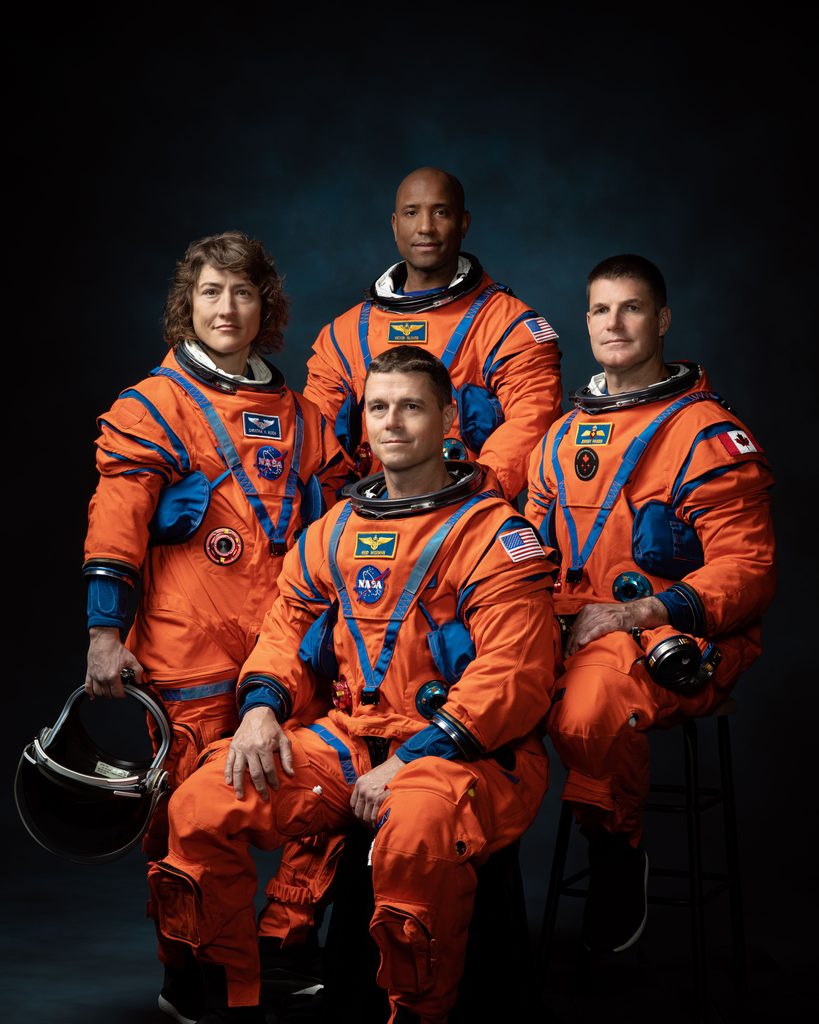
Official crew portrait for Artemis II, clockwise from left: NASA astronauts Christina Koch, Victor Glover, Canadian Space Agency astronaut Jeremy Hansen, NASA astronaut Reid Wiseman. | Photo by Josh Valcarcel
On 1 April 2026, the global spaceflight narrative achieved a landmark milestone when NASA’s Artemis II mission lifted off from Launch Complex 39B at the Kennedy Space Centre at 18:35 EDT. Marking the first crewed lunar mission since the conclusion of the Apollo programme in December 1972, the historic launch saw commander Reid Wiseman, pilot Victor Glover, mission specialist Christina Koch, and Canadian Space Agency astronaut Jeremy Hansen embark on a ten-day circumlunar journey aboard the Orion spacecraft.
Following earlier technical delays in February and March, the Space Launch System (SLS) rocket successfully propelled the crew into a high-Earth orbit before executing the translunar injection burn. The mission carried the four astronauts on a free-return trajectory around the far side of the Moon—setting a human altitude record for the farthest distance travelled from Earth—before concluding with a splashdown in the Pacific Ocean on 10 April 2026. The successful flight served as the critical precursor for subsequent surface landings under the broader Artemis programme.