The Disgrace of Gijón: Algeria’s Early Goodbye
Algeria Returned Home Because Two German-Speaking Countries Worked Together.
The Disgrace of Gijón: Algeria’s Early Goodbye
Algeria Returned Home Because Two German-Speaking Countries Worked Together.
By Yusif Babayev
Published: 23 April 2026
By Yusif Babayev
Published: 23 April 2026
The FIFA World Cup is on the horizon. This is one of those tournaments that is far more than just a sporting event. Even those who never normally watch a football match wait impatiently for the World Cup, including supporters whose nations did not qualify. There are many unforgettable moments in the history of the World Cup, as well as those that we should never forget.
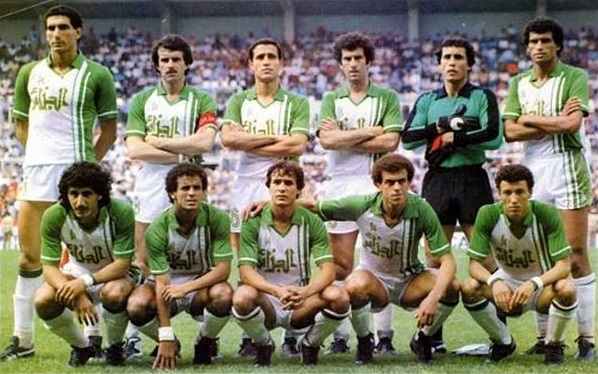
To remind you of a story that we should never forget, we take you back to 1982. Algeria had qualified for the World Cup for the very first time. The whole nation was thrilled, waiting eagerly for the summer to arrive so they could watch their team on the world stage.
When summer came, things started brilliantly for the Desert Warriors. They won their debut game against West Germany, becoming the first African team to defeat a European side in a World Cup match. Yet, the wave of optimism was swiftly cut short in their second fixture. On 17 June, they faced Austria and fell to a 2–0 defeat.
When the third matchday arrived, Algeria faced Chile in a crucial fixture: they either had a chance to continue their journey or would return home early. At the whistle of referee Rómulo Méndez, the match got underway. Algeria found an early goal, with Assad finding the net in the 7th minute. Before the half-time whistle, Algeria scored twice more: in the 31st minute, Assad secured his brace, and four minutes later, Tedj Bensaoula made it 3–0. They went into the break with a commanding three-goal lead.
The second half began, and in the 59th minute, Chile were awarded a penalty. Juan Carlos Neira stepped up to the spot and converted. In the 73rd minute, Chilean striker Juan Letelier found the net to bring the score to 3–2. That proved to be the final goal of the match. Algeria had secured the victory, but a win against Chile did not guarantee qualification for the second round; they still had to await the result of the final group match between West Germany and Austria, scheduled for the following day. If West Germany won by one or two goals, both European sides would progress, whereas any other result would see either West Germany or Austria eliminated.
In the city of Gijón, at the whistle of Scottish referee Bob Valentine, the match commenced. In the 10th minute, Horst Hrubesch scored for West Germany. Shortly after, the match descended into farce. Both teams virtually ceased any attempt to play competitive football. It appeared as though the two German-speaking nations had reached an implicit understanding. Once the goal was scored, whichever side had possession remained in their own half, aimlessly passing the ball across their back line without any intention of attacking. On the rare occasions a shot was taken, it was struck with complete disregard for accuracy.
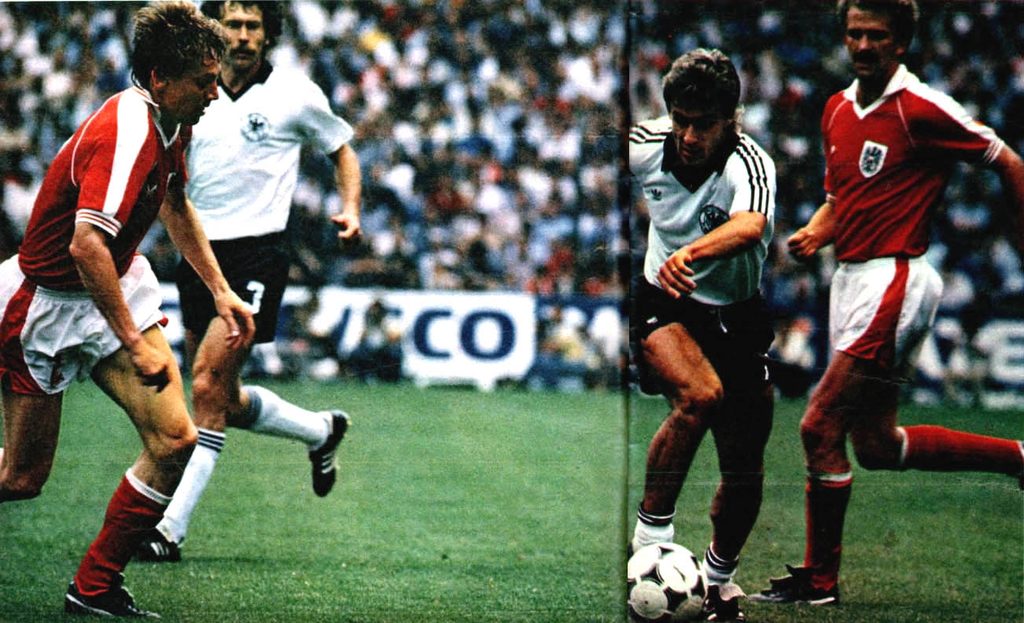
A moment of the Germany v Austria match.| Photo by Guillermo Gruben
Neither team attempted to hide their intentions, and the display was widely condemned. At one point, West Germany’s ARD commentator Eberhard Stanjek refused to comment on the rest of the game. Austrian commentator Robert Seeger openly bemoaned the spectacle and asked viewers to turn off their television sets. The game ended in a 1–0 victory for West Germany, ensuring progress for both European nations and eliminating Algeria on an inferior goal difference. The local newspaper, El Comercio, printed its match report in the crime section.
In the aftermath of the match, outrage ensued. Algerian football officials lodged an official protest with FIFA. However, FIFA ruled that no official rules had been broken and declined to take disciplinary action, with both teams denying any explicit collusion. Nevertheless, the scandal prompted a permanent overhaul of the rulebook. From the 1986 World Cup onwards, the final pair of matches in every group has always kicked off simultaneously to safeguard the integrity of the tournament.