
What’s Bad About the Michael Film?
What about the storyline? What about the visual effects? What about all the details that make the film either good or bad?
By Yusif Babayev | Published: 28.04.2026
Lately, social media scrollers probably see a video about Michael Jackson after every two videos. Most critics do not like the film; on the other hand, people seem to have loved the film. Development of the film started in late 2019. Deadline Hollywood reported that the producer Graham King had the rights to produce a film about Michael Jackson. In January 2023, it was announced that Antoine Fuqua would be the director. That month, the casting director Kimberly Hardin started casting.
The film’s storyline traces the arc of Michael’s youth: from the formation and rise of The Jackson 5 to the shadow cast by his father’s rigid discipline and taking advantage of him. It chronicles the genesis of a solo career that redefined the industry. In other words, the film’s timeline stretches from a humble, impoverished childhood in Gary, Indiana, to the iconic 1988 solo concert in London.
Earlier versions of the script included the accusations of child sexual abuse against Jackson. One draft opened in medias res in 1993, showing Jackson staring at his reflection as police arrived at his Neverland Ranch home. While the third act explored the impact of these allegations, they were later removed. This change occurred after a clause was found in a settlement with Jordan Chandler that prohibited any mention of him in the film. Further delays followed when the Palisades Fire damaged the screenwriter’s home.
In the film, there is a detail that might lead to a misunderstanding. We see the scene where Quincy Jones talks with Michael about making a solo album, and minutes later, we witness how much the public loved it. That album turned out to be ‘Off the Wall’, one of the most celebrated albums in history. Some misunderstood this to be Michael Jackson’s first-ever solo album, which it is not. It was his first solo album as an adult and marked his first collaboration with Quincy Jones. His first-ever solo album, Got to Be There, was actually released much earlier.
There are certain strengths to the film, but there are definitely some glaring flaws. To start with the negatives: the visual effects are incredibly poor. They are so subpar that had the filmmakers decided to use actors in cheap animal costumes instead of these effects, it would have been an improvement; at least then, we would have had a good laugh. Another major issue lies in the storyline. Several key historical figures are absent, most notably Janet Jackson, who declined to be portrayed, and Michael’s younger brother, Randy Jackson. The film also fails to feature Diana Ross, an essential figure whose mentorship was pivotal to the early stages of Michael’s career. Consequently, the storyline is too weak to properly convey Michael Jackson’s life, and it lacks the necessary emotional depth. Throughout the entire film, you find yourself waiting for a great wave of emotion that never arrives. Instead, the narrative remains flat, continuing in the same repetitive manner from beginning to end.
Now, let’s continue with strengths: hearing those iconic Michael Jackson songs, especially during the concert scenes, makes you feel as though you are not merely in a cinema watching a film, but standing in the midst of the concert itself. One might even feel the urge to stand up and sing along. The dance sequences are equally impressive; it is almost as if the filmmakers utilised archival clips of Michael Jackson rather than filming new scenes.
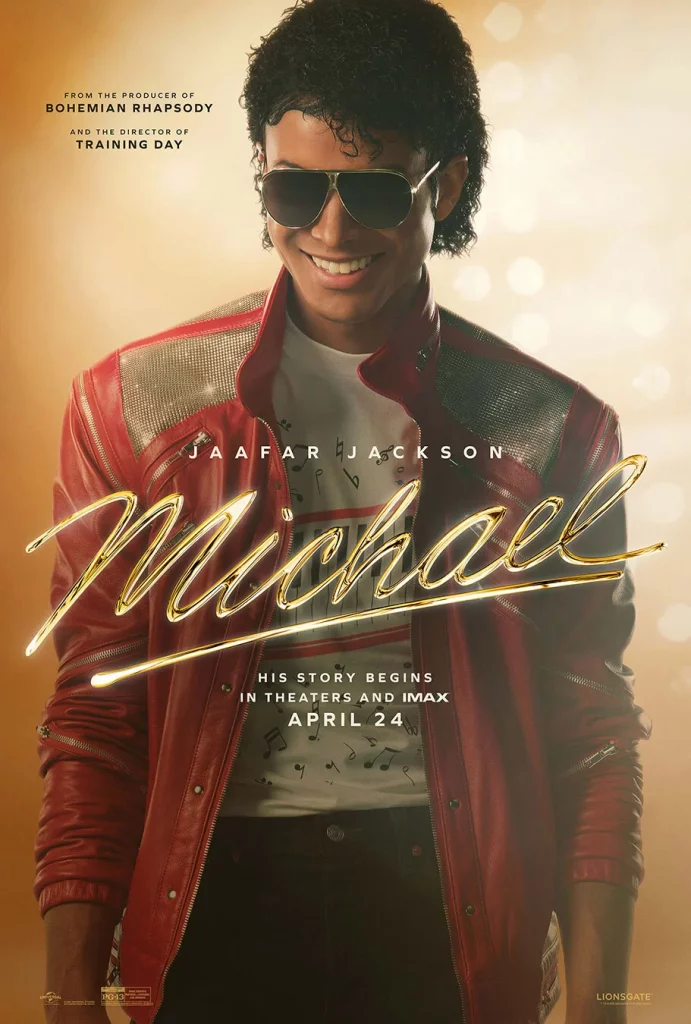
Another triumph is Jaafar Jackson’s performance. While it is too soon to judge the trajectory of his acting career – or whether he will portray future roles with the same skill – it can be said with certainty that no one else on this earth could have inhabited the role of Michael with such precision. It was a masterstroke of casting. His voice, his mannerisms, and his movements on the dance floor were all, quite incredibly, the mirror image of Michael himself.
In conclusion, the film could have been much better. In biographical films of this nature, the most daunting task is portraying a historical figure in a way that truly convinces the audience – and Jaafar Jackson succeeded in this. However, the lack of other details we discussed ultimately weakened the film. Nevertheless, it remains a production you can enjoy in the cinema.